Connected Fitness & Smart Home Gym Tech
Smart Rower Comparison: Quiet Picks for Apartments
4th Apr•9 min read
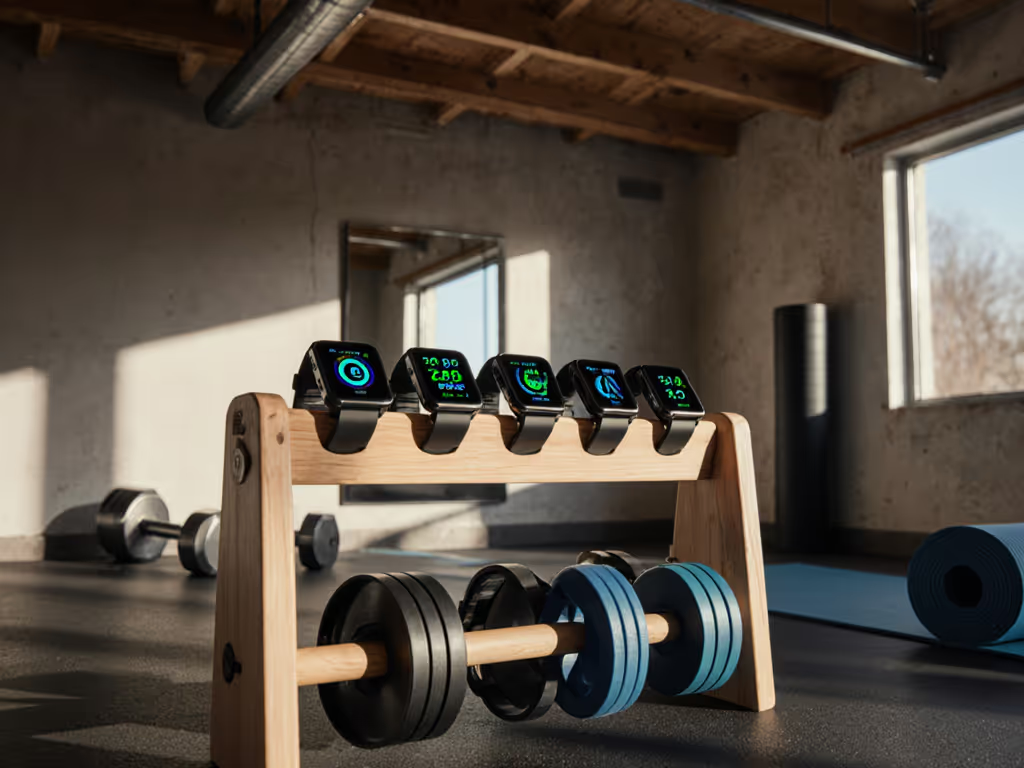
When you're building a wearable fitness tracker comparison for a home training environment, most people focus on the wrong question. They ask, "Which tracker is most accurate?" But in a home gym smartwatch analysis, the real question is: "Which tracker helps me train consistently without adding visual clutter or friction to the room?"
I learned this from a client whose attic gym had sloped ceilings and only one dormer window. We rotated the power rack ninety degrees, swapped a bulky bench for a low-profile option, and mounted storage between studs. If you're rethinking where to stash gear, see our space-saving home gym storage solutions. But the turning point? He started wearing a lightweight smartwatch instead of manually logging workouts on his phone. The device disappeared visually: no phone on the bench, no cables, no screen dominating the space. The room looked calm. He trained three times more frequently. A subtle shift, but it proves the point: if it looks calm, it trains calm.
A smartwatch or fitness band isn't just a tracking tool (it is a quiet wearable technology) that preserves the visual serenity of a minimal home gym. Below, I've compiled the questions I hear most often, answered with the precision and focus that a design-first approach to home training demands.
A: Yes. In a commercial setting, a slight tracking error is invisible because the environment is already loud, crowded, and stimulating. But in a small bedroom or basement gym, where visual calm directly correlates with adherence, every element must earn its place (including your wearable). That said, accuracy is about recovery metrics tracking and workout consistency, not perfection.
Home gym training often involves unconventional movement patterns: landmine presses, trap bar deadlifts, cable-based exercises, and dumbbell variations. If cables are central to your setup, compare options in our home cable machine showdown. Most trackers use accelerometers and gyroscopes to infer movement, so a squat performed with a safety bar looks similar to a barbell squat, but a cable machine movement might register oddly or not at all. The key metric isn't the calorie count; it's the ability to log which session occurred and how you recovered afterward.
What matters in a small space: Can the tracker distinguish between a heavy strength session and light mobility work? Can it detect your morning HRV (heart rate variability) while you're still lying in bed, preparing mentally for your session? These functions support adherence far more than sub-calorie precision.
A: It means a device that operates passively, requiring no external hardware, no Bluetooth speakers, and no screen glare that disrupts the room's visual architecture. A smartwatch or fitness band sits on your wrist, collects biometric data silently, and (if you've configured it properly) doesn't buzz or ping during your session. To connect wearables with your rack, rower, and apps without headaches, see our smart home gym ecosystem guide.
Contrast this with a chest strap or armband monitor, which adds a visible element, or a phone placed on your rack, which creates visual clutter. Wrist-worn devices achieve what every minimal home gym needs: quiet wearable technology that fades into the background while you focus on posture, breathing, and movement quality.
A smartwatch with a dark, minimal watch face (or always-off screen) adds nothing to your storage density metrics. It requires no wall real estate, no cable routing, and no shelf space. This is why I consistently recommend wrist-worn trackers over rack-mounted devices or phone-based logging for home training environments.
A: Break it into three categories:
1. Movement Recognition (Workout Mode Specificity)
2. Heart Rate and Recovery Metrics
3. Long-Term Trend Reliability
A: For home gym training, my bias runs toward minimal, low-profile equipment, and that includes wearables. A dedicated fitness band (like a non-smartwatch tracker) wins on three fronts:
Visual Minimalism: A thin band disappears against your wrist. A smartwatch face (even dark) adds visual presence. In a 10x12 bedroom gym, every visual element compounds clutter perception.
Battery Life: Fitness bands often run 7-14 days; smartwatches, 1-3 days. Frequent charging breaks your data streak and adds friction. Adherence depends on consistency, and consistency requires minimal friction.
Reach Envelopes and Clearances: This might sound odd, but during overhead movements (military presses, pull-ups), a smartwatch face can catch on a bar or cable. A thin band doesn't. In close quarters, this matters.
That said, if you value on-wrist messaging, weather, or music control outside the gym, a smartwatch remains solid. Just choose one with a minimal always-off display option.
A: Not all metrics move the needle. Focus on these:
Ignore metrics like step count, calories, and distance totals on lifting-centric days. To turn these metrics into weekly programming, use our home workout blueprint.