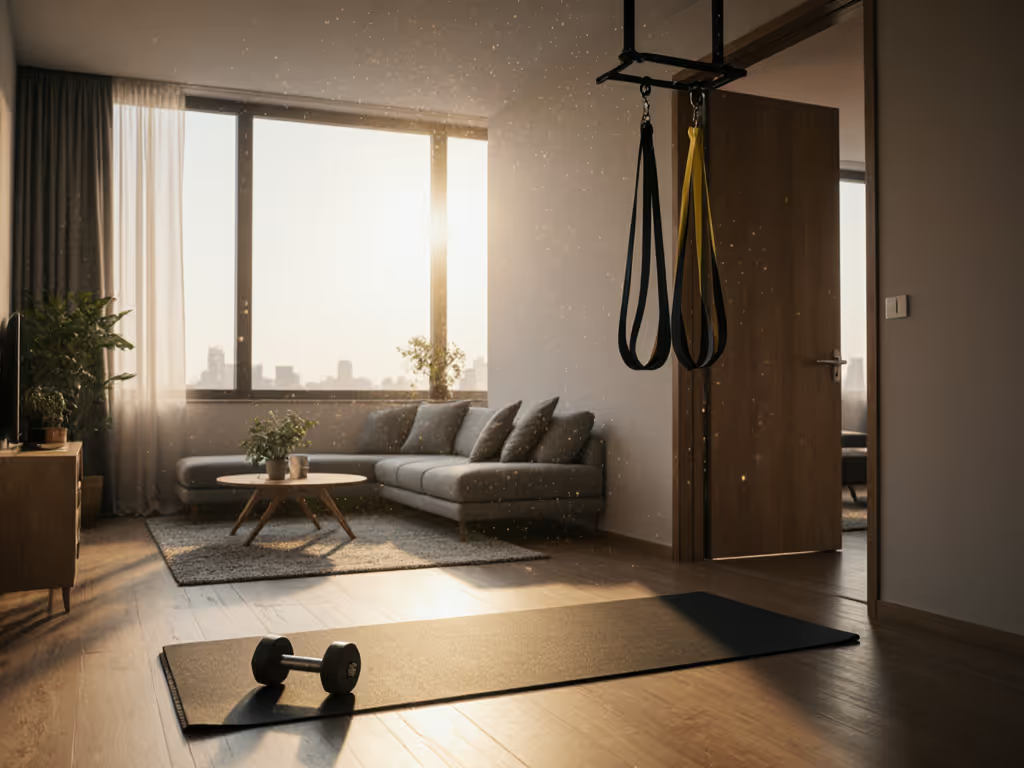
Designing good home gym equipment for Muay Thai is tricky when you also need quiet, neighbor-friendly Thai boxing training gear. You want to kick, knee, and clinch hard without waking kids, annoying the downstairs neighbor, or chewing up your walls and floors. This guide is a step-by-step roadmap to build a quiet Muay Thai corner that fits small spaces and grows in smart stages.
Roadmap, then checkout.
We'll walk through:
How to measure noise, space, and limits in your home
What type of bag setup actually stays quiet
How to mount and isolate a heavy bag for minimal vibration
How to practice clinching and elbows at home without wrecking the room
Smart phases (Now/Next/Later) so you don't overbuy or clog your space
Step 1: Map Your Limits (Noise, Space, and Rules)
Before buying anything, you need a clear picture of the room and the rules. This is where most regrets start: not the gear itself, but the mismatch with your space.
1.1 Noise profile: where will sound travel?
Quiet Muay Thai isn't just about the bag you buy; it's about how impact travels through structure. If you're training in a multi-unit building, see our apartment-specific gym noise control guide for practical soundproofing tactics.
Ask yourself:
What's under the training area?
Over another apartment or bedroom -> prioritize floor isolation
Over a garage/basement -> more forgiveness
What's on the other side of the wall?
Neighbor's living room vs. your own closet makes a huge difference
What times will you train?
Early morning/late night -> you need truly low-impact options
For most apartments:
Assume thuds through the floor are the biggest problem, more than air noise.
Your goal is to deaden impact at the contact point (bag, mount, and floor), not just turn down volume.
1.2 Space and ceiling: what actually fits?
Grab a tape measure and note:
Floor footprint available: length x width (in feet or meters)
Ceiling height: floor to underside of joists or fixtures
Clearance around the bag:
Ideal: 360 degrees space for kicks and knees
Minimum: 2–3 ft (60–90 cm) clear in the main strike direction
Record these numbers. They'll tell you whether a hanging bag, freestanding base, or wall-mounted arm makes more sense. For more space-first ideas that stay quiet, see our small-space home gym essentials.
The most "quiet" gear is the gear that fits your room's structure and schedule, not just a marketing label.
Step 2: Choose the Right Bag Style for Quiet Muay Thai
There's no universal "quietest" bag; each category trades noise, realism, and footprint differently. Let's compare the main styles for a home Muay Thai bag setup.
2.1 Hanging heavy bag (traditional feel, needs isolation)
A hanging heavy bag gives the most authentic Muay Thai feel for punches, kicks, knees, and some clinch work. The trade-off: if you mount it poorly, vibration can run straight into your joists and your neighbor's ceiling.
One solid example in this category is the:
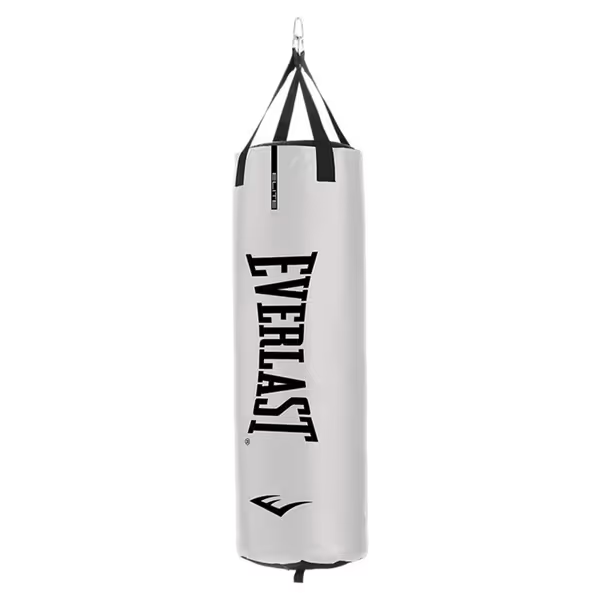
Everlast Elite Punching Bag - Hanging Heavy Bag for Adults
Weight and size: About 70 lb fill, roughly 13" wide x 42" high - compact for small rooms
Fill: Sand + recycled fiber mix -> denser impact feel and better shock absorption than pure cloth
Shell: PVC / faux leather designed for high wear; easier to wipe clean in a shared room
Mounting: Comes with chain assembly and top straps, plus a bottom D-ring to tie it down
From a quiet training perspective, this bag's strike deadening is the key feature: the sand/cloth mix absorbs more of the blow inside the bag, so less of that energy travels into the chain and ceiling compared with very springy, light bags.
Everlast Elite Punching Bag
Silent, space-smart punching bag for effective, apartment-friendly striking workouts.
Superior shock absorption minimizes noise transmission.
Durable PVC and double-reinforced D-rings ensure longevity.
Bottom tie-down strap adds stability, reducing swing and noise.
Cons
Requires a sturdy mounting solution (stand or ceiling).
Customers report that the punching bag is a quality and durable product, suitable for home training. They find it effectively absorbs punches and is a worthwhile investment.
Customers report that the punching bag is a quality and durable product, suitable for home training. They find it effectively absorbs punches and is a worthwhile investment.
Dense fill = less clangy rebound, more thud contained in the bag
Bottom D-ring lets you add a floor anchor or bungee -> reduces wild swinging (and impact spikes)
Narrower diameter works well in small footprints, easier to keep away from walls
Cons to manage:
Needs a solid ceiling joist or a properly installed stand
Chain and mount can still transfer vibration if you don't isolate them
2.2 Freestanding base bags (quicker setup, more floor noise)
Freestanding bags with a big plastic base are appealing for renters because they avoid drilling. But they have a different noise profile:
Pros:
No ceiling mounts
Simple assembly
Easy to slide into a corner when not in use
Cons for quiet use:
The base slamming the floor can be louder than a hanging bag
Hard kicks can make the unit walk unless heavily weighted with sand
On hardwood or thin vinyl, vibration can transmit straight down
In many apartments, a freestanding unit is actually no quieter than a well-isolated hanging bag, especially for heavy kicks.
2.3 Wall-mounted or fold-back arms (compact, direction-limited)
A wall-mounted swing arm that holds a hanging bag away from the wall is a strong option when:
Your landlord allows reversible anchors
You want to fold the bag out of the way after training
Noise-wise, you still need good isolation at the mounting points, but the ability to swing the bag away from neighboring walls is a plus.
2.4 Alternative targets (double-end bag, kick shield, pads)
For very noise-sensitive environments or late-night sessions:
Double-end bag (floor-to-ceiling ball)
Fast, snappy punches with much lighter impact
Great for rhythm and accuracy when power work is off-limits
Kick shield / Thai pads against a wall mat
You or a partner can hold them, or you can strap them to a dense cushion or mattress
Quieter than full power on a hanging bag, especially for elbows and knees
These don't replace a heavy bag, but they give you noise-window flexibility when you can't go all-out.
Step 3: Build a Quiet Mount and Floor Stack (The Real Secret)
Most it's too loud complaints come from poor mounting and flooring, not the bag itself.
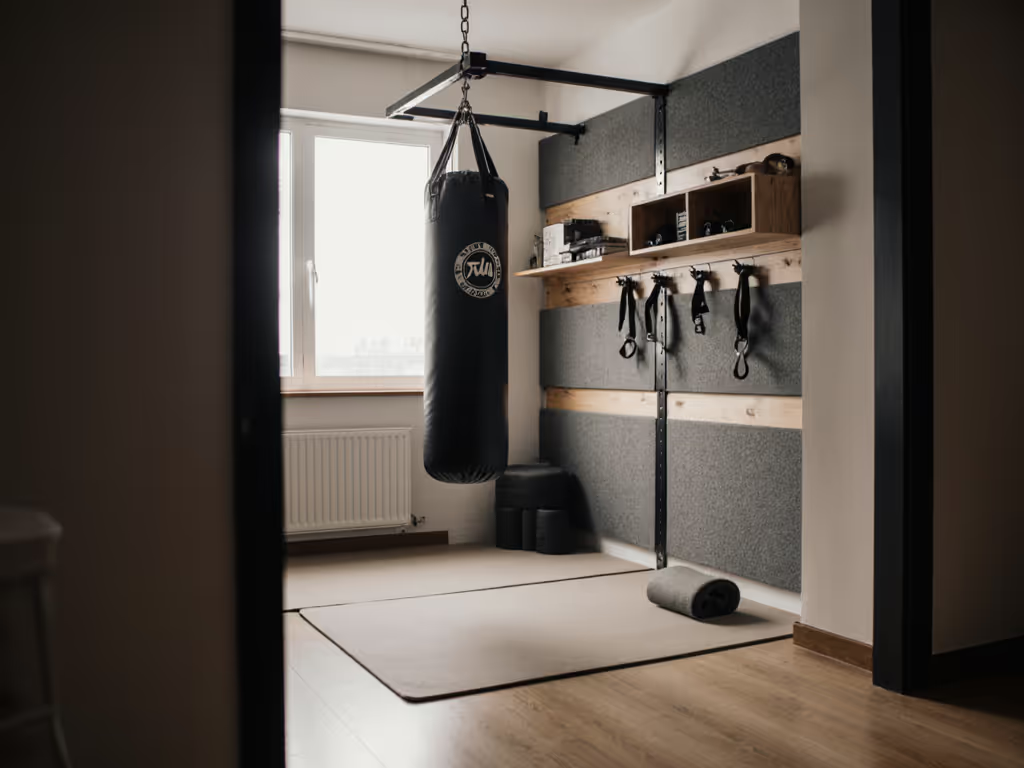
3.1 Ceiling mounting the Everlast Elite bag quietly
If you choose the Everlast Elite Punching Bag as your primary Thai boxing training gear, you'll use the included chain and hardware, but you'll upgrade the interface with the house:
Find a structural joist or beam
Use a stud finder rated for deep scan, or access exposed joists in a basement/garage.
Use a rated ceiling mount plate (not just an eye screw)
Choose a steel plate with multiple lag bolts to spread load.
Add a rubber or polyurethane isolation layer between plate and joist
A dense rubber pad or purpose-built vibration isolator reduces high-frequency transfer.
Use a swivel or carabiner with a rubber bushing
This cuts metal-on-metal squeak and ping from the chain.
With this setup, the Everlast bag's internal sand/cloth mix does the first layer of shock absorption, and the mounting sandwich does the second.
3.2 Use the bottom D-ring to control swing
The Elite bag's bottom D-ring is not just a stability bonus; it's a noise-control tool:
Attach a light bungee cord from the D-ring to a floor anchor, kettlebell handle, or weighted base.
This reduces big arcs when you throw round kicks or teeps.
Less swing = fewer sudden tension spikes in the chain = less structural vibration.
Sudden stop and start of a wildly swinging bag often creates more noise than the actual strikes.
3.3 Floor stack for apartments and upstairs rooms
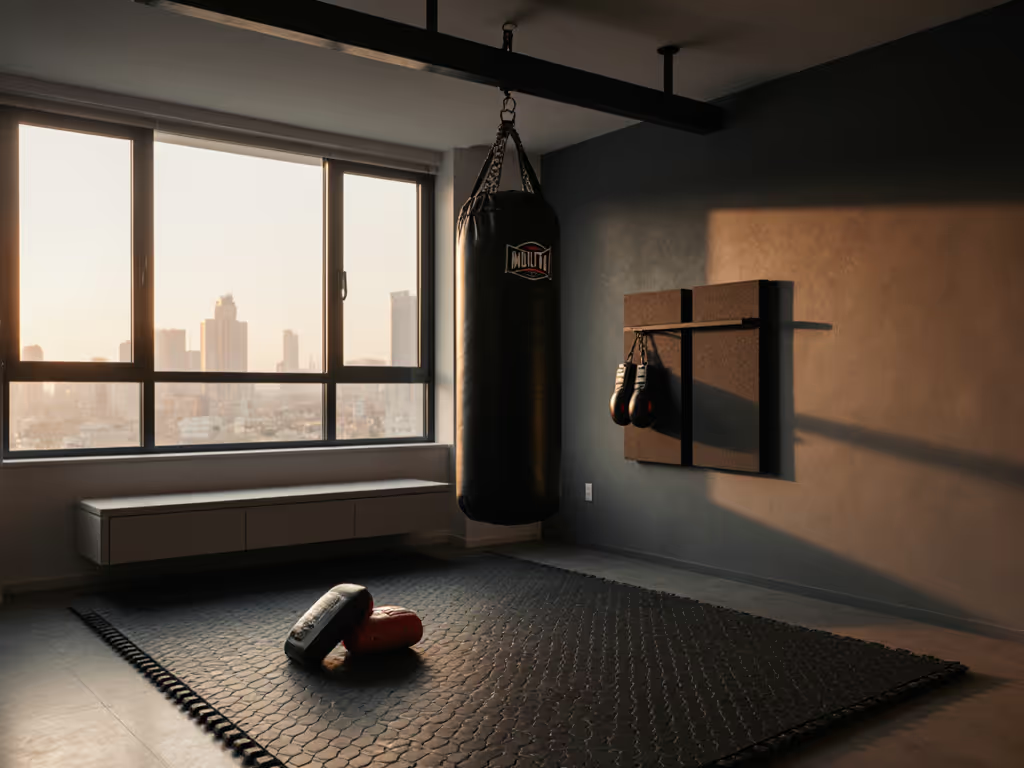
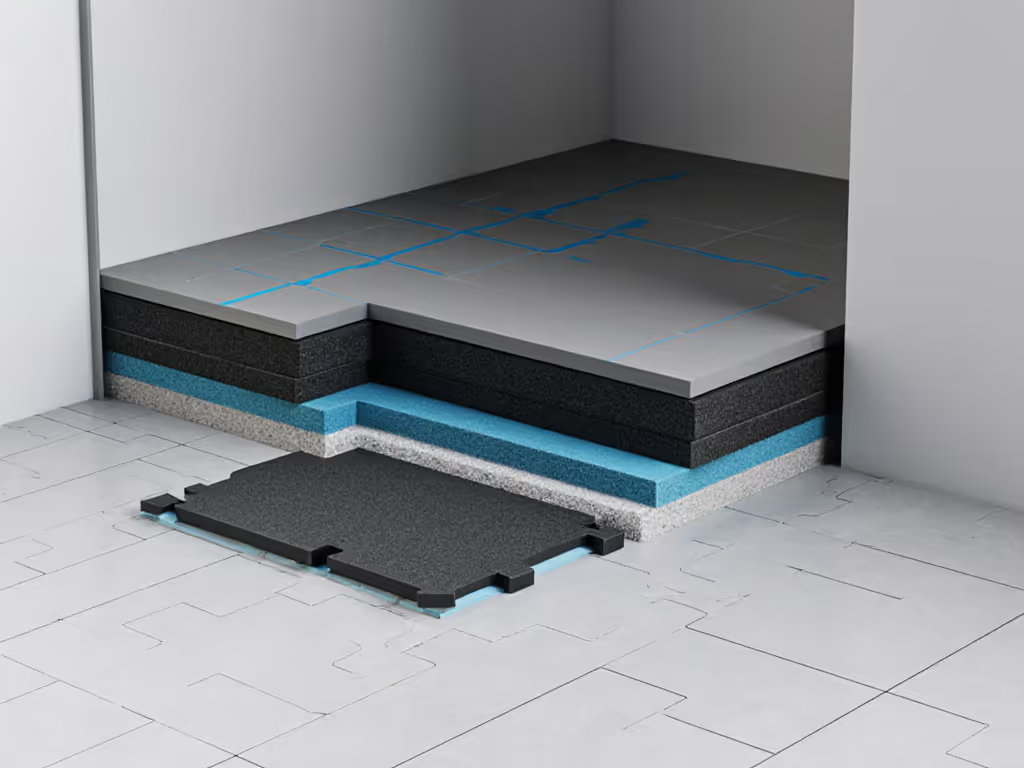
Even with a hanging bag, your feet make noise when you pivot, step, and check kicks. A quiet floor stack has three layers:
Base protection
Interlocking rubber or high-density foam mats, at least 3/8" (10 mm) thick.
Cover a zone of about 6' x 6' (1.8 x 1.8 m) for a single bag setup.
Decoupling
If you're over a neighbor, add a second layer of softer foam or underlay beneath the main mats.
This floats your training surface a bit from the subfloor.
Traction top
For barefoot Muay Thai, choose a mat texture that won't burn your feet but still lets you pivot.
Expect this to reduce impact noise by a noticeable amount. Many users report they can shadow box and do light bag work during nap time with a good floor stack. For tested options, compare soundproof gym flooring tiles vs rolls.
Step 4: Plan Your Training Around Noise Windows
Designing a quiet setup isn't only hardware. It's also programming.
4.1 Segment your sessions
Use a three-zone structure:
Quiet Zone (early/late)
Shadow boxing, footwork drills
Double-end bag, light teeps and knees on a well-isolated heavy bag
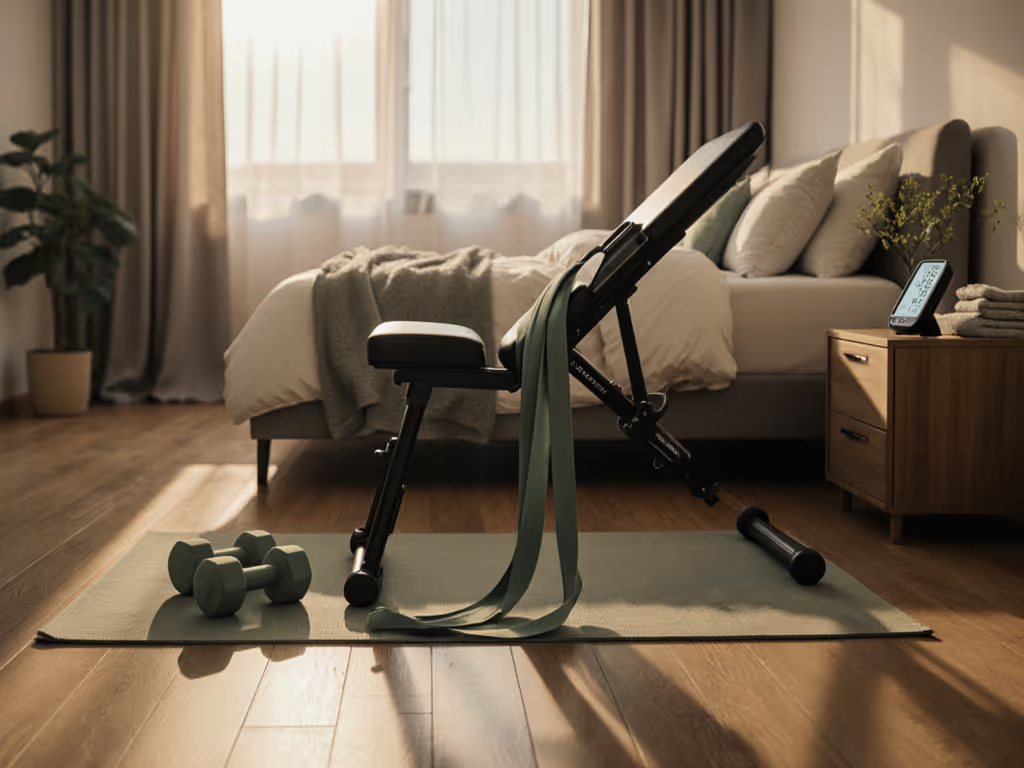
Mobility and Muay Thai conditioning equipment like bands and light dumbbells
Medium Zone (daytime but still cautious)
Moderate kicks and punches on the heavy bag
Clinching drills with reduced power
Loud Zone (middle of the day, neighbors at work)
Full power round kicks
Conditioning finishers with higher impact
Align the intensity with your building's natural noise patterns so you don't rely solely on hardware to fix noise problems.
4.2 Clinching training at home without chaos
You won't perfectly replicate a partner, but you can get surprisingly far:
Use the Everlast Elite bag for clinch grips
Work hand fighting, neck control, and turns using the bag as a torso stand-in.
Because the bag is only ~42" long, hang it so the middle aligns with your sternum for realistic head position.
Add a soft neck harness or towel around the top
Gives a neck to grip without damaging the bag straps.
Keep footwork light
Clinch drills can be kept almost silent with good floor mats and controlled movement.
Clinching is one of the best quiet day skills to emphasize: high technical value, minimal structural noise.
Step 5: Phase Your Purchases - Now / Next / Later
Here's where we avoid clutter and regret. You don't need a full gym day one. Build in phases with clear roles for each item.
Start lean, upgrade on schedule, avoid sunk-cost traps.
Now: Minimum viable quiet Muay Thai corner
Goal: Start training effectively with minimal noise and minimal gear.
Core pieces:
Flooring (non-negotiable)
Interlocking rubber/foam mats for a 6' x 6' zone.
Primary bag: Everlast Elite Punching Bag - Hanging Heavy Bag
Use as your central striking target for punches, kicks, knees, and light clinch.
Ceiling or stand mount with basic vibration control
Mount plate with a rubber pad + quality hardware.
Hand protection
12–16 oz gloves + hand wraps to protect both your joints and the bag shell.
Why this works:
You cover all fundamental Muay Thai strikes on a single, durable target.
You immediately control the biggest noise sources: structural transmission and floor impact.
Total footprint stays compact and visually tidy for a multi-use room.
Next: Noise-flexibility and technical refinement
Goal: Add tools that let you train productively when you can't go full power.
Add-ons:
Double-end bag or reflex ball
Lower impact, high skill demand; great for late nights.
Kick shield or wall-mounted pad
Lets you practice push kicks and knees with controlled contact.
Compact conditioning gear
Light dumbbells, resistance bands, or a skipping rope if your ceiling height and downstairs neighbor allow.
Why this works:
You create quiet mode options so you can still train daily.
Everything remains stowable; no large new footprints.
Later: Modular upgrades and specialization
Goal: Improve realism, add variety, and adjust for evolving goals without crowding the room.
Possible upgrades:
Wall-mounted fold-back arm for the Everlast bag
Frees floor space when not training.
Allows more precise positioning relative to walls and neighbors.
Secondary target (only if space allows)
A lighter bag for speed work, or a different shape (banana bag) if you want lower-leg kicking focus.
Low-noise cardio machine
Magnetic spin bike or rower for conditioning alongside your Muay Thai. If you lean toward rowing, this water vs air rower comparison breaks down noise and fit for small spaces.
Each Later item should have to earn its way in by solving a specific problem you're feeling (e.g., "I need more low-impact conditioning," not just "I saw this on Instagram").
Step 6: Make the Room Work For You (Layout and Aesthetics)
A quiet setup that looks chaotic will still stress you out and shorten your sessions. Let's design the room so your Muay Thai gear coexists with the rest of your life.
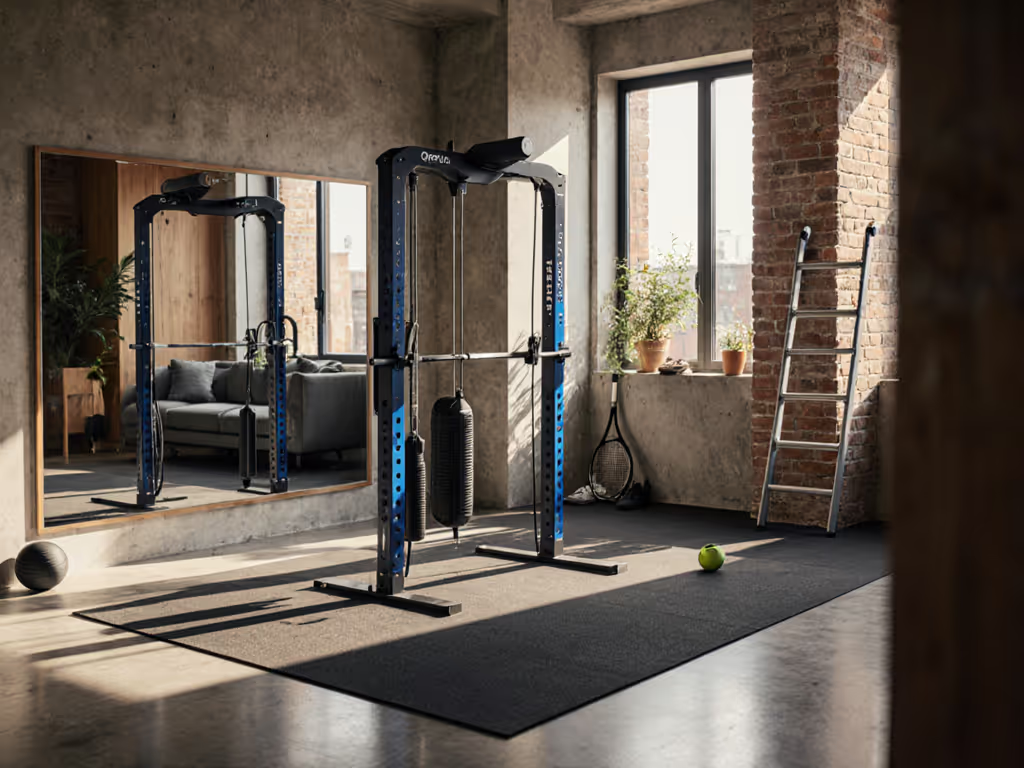
6.1 Room-first layout
Walk through your room and plan:
Pathways: No tripping over bases, mats, or chains to reach a desk, bed, or closet.
Bag centerline: Position the Everlast Elite bag so your main strike direction faces open space, not a drywall surface 18" away.
Windows and doors: Ensure you can fully open doors and cabinets with the bag at rest.
A simple approach:
Put the bag slightly off-center in the training corner so you have a natural heavy kick side with more clearance.
Use the corner behind the bag for vertical storage: gloves, wraps, small gear. For more tidy ideas, see our home gym storage solutions.
6.2 Visual and sound damping
A few room tweaks help both aesthetics and acoustics:
Heavy curtains or fabric panels on nearby walls soften echoes.
Bookshelves or storage units against shared walls add mass and absorb sound.
Stick to one or two color themes (e.g., black mats + white bag) so the room looks intentional, not cluttered.
Because the Everlast Elite bag comes in a clean white finish, it actually works well in a living room or office without screaming "gym".
Step 7: Daily Use, Maintenance, and Longevity
Quiet training isn't a one-time setup; it's maintained through habits.
7.1 Pre-session checklist (2 minutes)
Before each workout:
Check the mount hardware visually for loosening.
Make sure the bottom D-ring anchor or bungee is properly tensioned.
Confirm mats are locked and flat - no edges to catch your foot.
Decide your noise zone (quiet/medium/loud) based on time of day.
7.2 Impact management over time
A dense bag like the Everlast Elite will settle slightly as the fill compacts. To keep the feel consistent and quiet:
Rotate the bag occasionally so you're not always smashing the same side.
If a hard lump forms, massage and redistribute the fill by hand.
Keep the surface clean; sweat and dust can increase friction noise from gloves.
7.3 Communicate with neighbors and family
No data point beats actual feedback:
Ask downstairs neighbors (or household members) if they hear anything during your sessions.
Adjust intensity and schedule based on real-world responses.
In my own small-space setups, a willingness to reconfigure - selling one bulky piece, keeping the items that pull double duty, and swapping in a more compact mount - has often mattered as much as any single product choice.
How the Everlast Elite Bag Fits Into a Quiet Muay Thai Roadmap
Pulling it together, here's where the Everlast Elite Punching Bag - Hanging Heavy Bag sits in your overall plan:
Role: Primary striking target for your home Muay Thai system
Strengths:
Dense, strike-deadened fill is inherently quieter than many light, springy bags
Included hardware gets you started; bottom D-ring supports noise-reducing anchoring
Size suits apartments and multi-use rooms
Requirements for best results:
Proper vibration-isolated mount
Decent floor stack
Sensible session programming across quiet/medium/loud windows
Built into a phased plan, it's the anchor of a quiet, modular Thai boxing setup that can live in a spare bedroom, office, or small garage without taking over the whole space.
The most "quiet" gear is the gear that fits your room's structure and schedule, not just a marketing label.
Next Steps: Explore, Measure, and Adjust
Instead of jumping straight to a cart full of gear, move in this order:
Measure and map your space and noise limits (Step 1).
Decide your bag style, with a bias toward a well-isolated hanging bag if your structure allows (Step 2).
Plan your mount and floor stack around impact control, not just aesthetics (Step 3).
Phase your purchases using the Now/Next/Later framework so each item earns its place (Step 5).
From there, you can explore:
More advanced clinching training at home tools as your skill grows.