Buying Guides by Audience & Goal
Good Home Gym Equipment For Quiet Muay Thai And Thai Boxing
21st May•15 min read
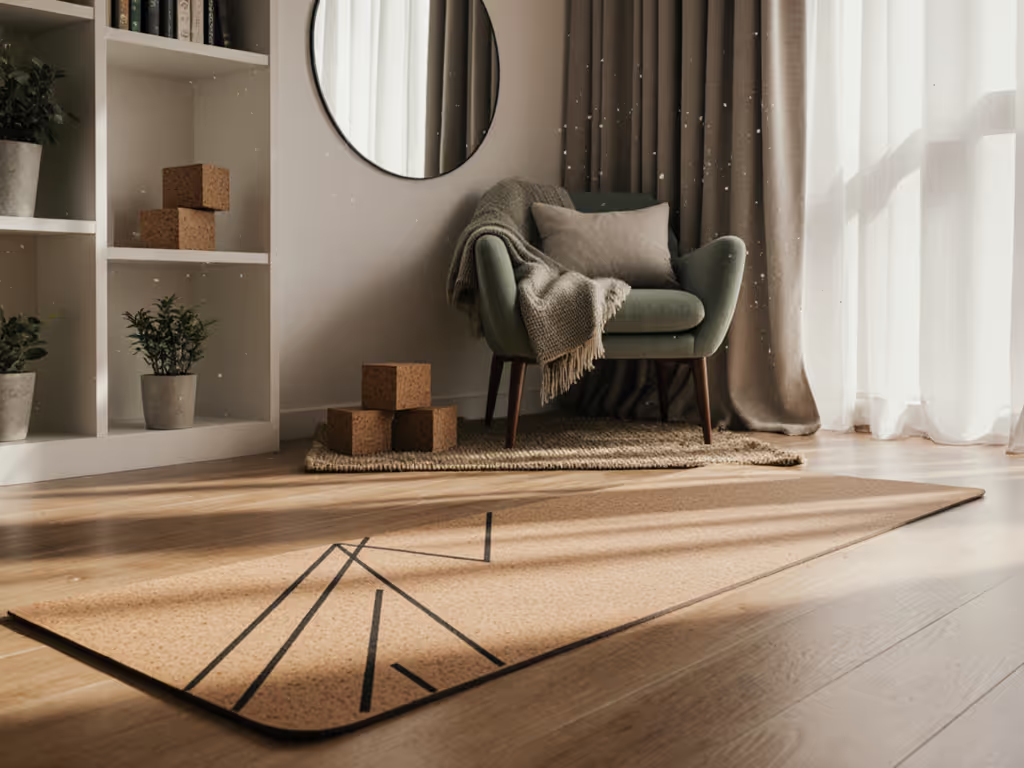
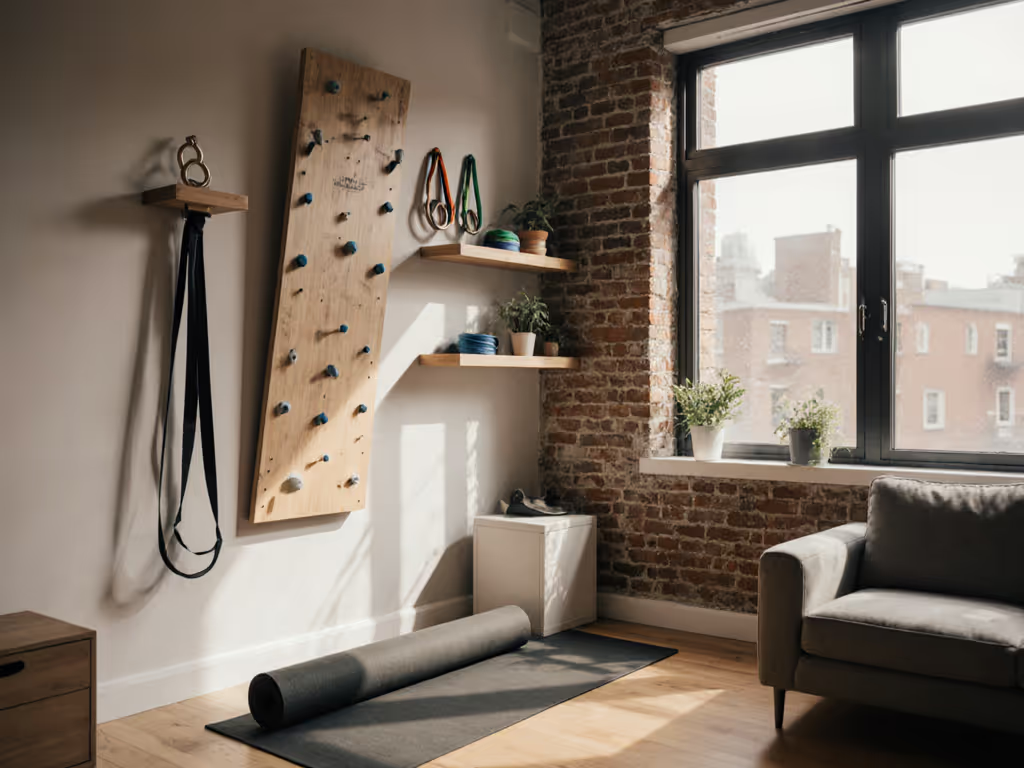
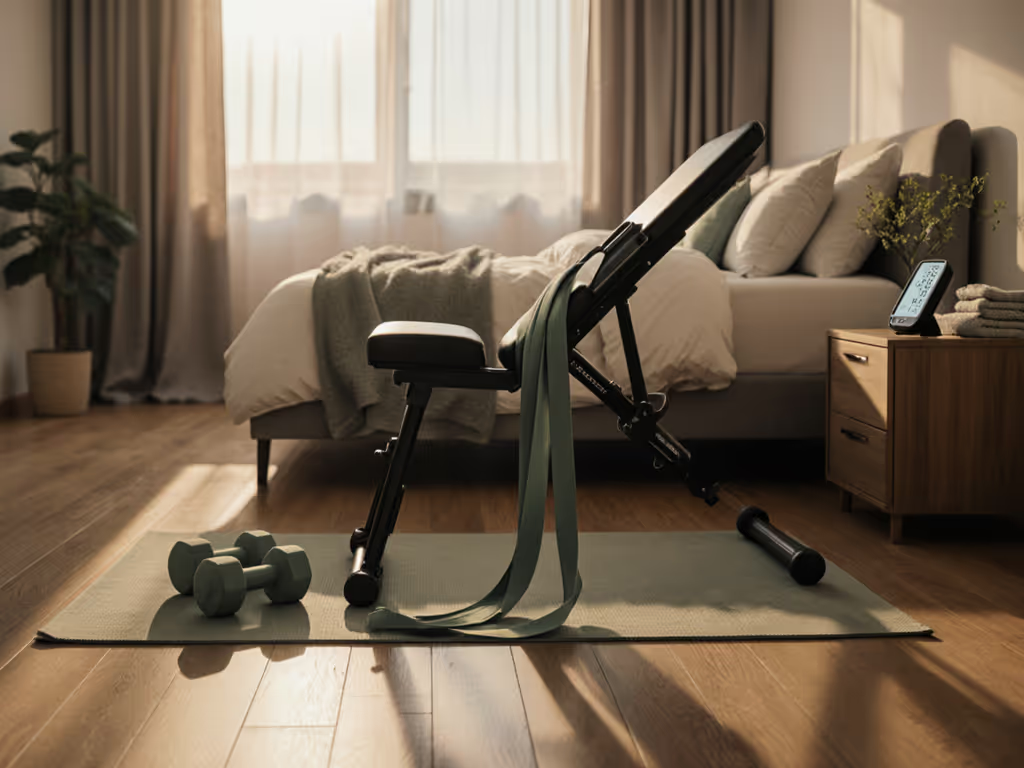
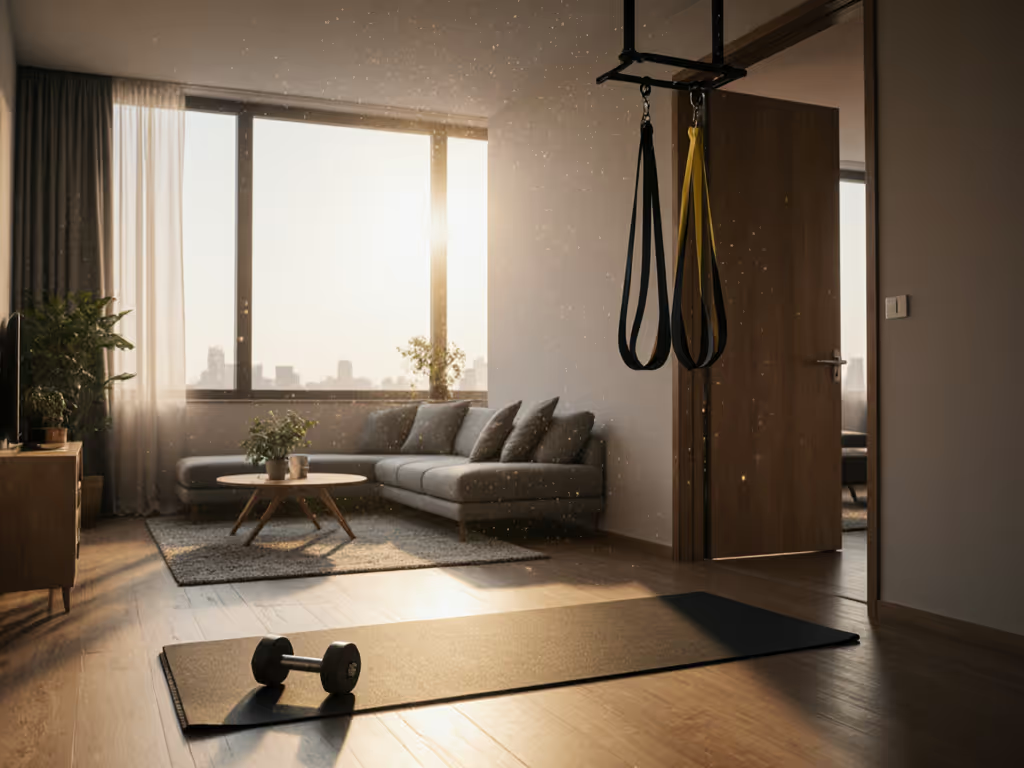
Building a home yoga studio essentials collection in a compact apartment or small room means choosing space-efficient yoga gear that won't consume floor real estate or trigger vibration complaints from below. The misconception is that yoga requires less forethought than strength training, but in noise-sensitive, footprint-limited homes, it's the opposite. Quiet yoga equipment prioritizes mat thickness, prop material, and isolation strategy just as much as a barbell platform does.
I learned this the hard way. In my first apartment, with paper-thin walls, I assumed yoga mats were interchangeable. After my neighbor finally knocked, I measured the room, layered materials, tested a dozen mat profiles with a phone meter, and rebuilt my practice space from the floor up. The neighbor never complained again. That day made me a noise-first layout nerd. Since then, I've mapped dozens of small rooms and discovered that the room chooses the gear, not the other way around.
This guide applies that blueprint-first discipline to yoga: measure your footprint and ceiling height, map your practice zones, then select mats and props that fit both your body and your boundaries.
Yoga in a small space isn't just about rolling out a mat. It's about understanding what's below, around, and above you.
Footprint Reality: A standard yoga mat is 68 inches long by 24 inches wide (173 cm × 61 cm), which is roughly the length of a tall person lying down. In a 10' × 10' bedroom or 12' × 8' living room corner, that mat consumes about 32 square feet once you factor in buffer space for arm extensions, lunges, and gentle backbends. Add props (blocks, straps, bolsters) and your practice zone grows.
Ceiling Height Callout: If your ceiling is below 8 feet (2.4 m), overhead presses and full sun salutation flows will feel cramped. Most residential apartments and basements clock 7.5 to 8 feet; condos and garages often drop to 7 feet. Before buying props, verify your standing reach and the clearance above your head.
Vibration and Sound Transmission: A yoga mat alone doesn't control noise. The mat dampens impact from your feet and props, but sound and vibration travel through the subfloor to joists and walls. A 1/8-inch mat (3 mm) offers basic comfort; a 1/4-inch mat (6 mm) or thicker begins addressing resonance, especially over tile or concrete. However, thickness without isolation layers is mostly comfort, not noise control. For step-by-step apartment-friendly fixes, see our apartment gym noise control guide.
Measure first, then let the room choose the gear.
Use Case: Lightweight mobility, travel, multi-use spaces.
Footprint: 68" L × 24" W × 1/8" thick (collapsed: 24" × 6" × 3") when rolled.
Noise Profile: Minimal isolation; relies on the floor beneath. Over hardwood or laminate, impact noise transmits directly. Over carpet, slightly dampened.
Vibration Isolation: Negligible. The mat is foam or PVC over a thin rubber base, it compresses under bodyweight but doesn't decouple from the floor.
Pros:
Cons:
Best For: Secondary spaces, supplementary props, or ground-floor units where noise transfer is not a concern.
--
Use Case: Dedicated home yoga practice, low-impact strength, daily use.
Footprint: Same base dimensions; rolled profile ~4" diameter, 24" long.
Noise Profile: Moderate isolation. A 6 mm premium mat (e.g., Manduka or Jade brands) adds cushion mass and a damping layer, reducing foot-strike noise by ~3 to 5 decibels at 1 meter, measurable but not dramatic.
Vibration Isolation: Better than thin mats. Natural rubber or closed-cell EVA foam bases provide slight decoupling. When combined with a cork layer underneath, isolation improves further.
Pros:
Cons:
Best For: Daily practitioners in upstairs apartments or shared-wall condos who pair the mat with isolation layers below.
--
Use Case: Noise-sensitive environments, converted living spaces, basements.
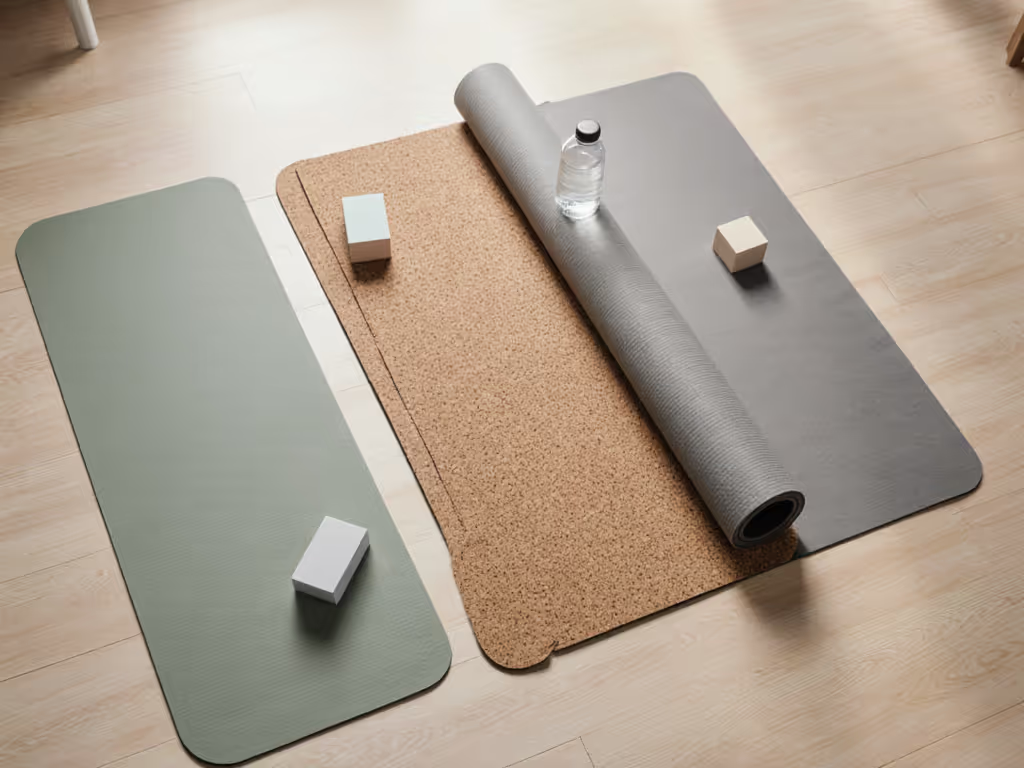
Footprint: Two layers, 1/4" mat + 1/4" to 1/2" cork, rubber, or foam base. Rolled profile ~5–6" diameter. When laid flat, adds ~1/2" to floor height.
Noise Profile: Significant isolation. A premium mat + cork underlayment reduces impact noise by 6 to 10 decibels at 1 meter and 3 to 6 decibels at 3 meters, audible to neighbors below. This is the "quiet is a feature" threshold.
Vibration Isolation: Excellent. Cork decouples the floor from the mat-and-user system. Rubber adds mass and absorbs high-frequency vibration. The combination breaks the sound transmission chain. To pick the right base layer for your floor, see our soundproof tiles vs rolls test results.
Pros:
Cons:
Best For: Upstairs apartments, shared walls, households with sleepers nearby, or basements with concrete floors and poor isolation.
--
Footprint per Block: 9" L × 6" W × 4" H (23 × 15 × 10 cm). Most practitioners use 2 blocks; stack and store in a corner or closet.
Noise/Vibration: Foam blocks are nearly silent. Wood or cork blocks produce a dull thud when set down. For small spaces, closed-cell foam EVA blocks ($15 to 30 per pair) are quieter and lighter than cork or wood.
Multifunctional Use: Elevate hands in forward folds, support the sacrum in restorative poses, and create a riser for meditation or breathing work. In small rooms, blocks reduce the footprint needed for certain poses.
Best For: Anyone with tight hamstrings or in small spaces where vertical stacking saves floor real estate.
--
Footprint: Negligible when coiled. Rolled loop: ~6" diameter.
Noise/Vibration: None. Resistance bands are silent and don't transmit vibration through the floor. For science-backed programming, use our resistance band training guide.
Multifunctional Use: Strap wrists or ankles to increase engagement, provide light resistance for standing leg work, and assist with deep stretches. In small-space yoga, bands reduce the need for heavier props or wall anchors.
Best For: Strength-oriented yoga, vinyasa flows, and anyone seeking quiet, portable resistance without equipment bulk.
--
Footprint: A 24" roller lies flat and stores upright in a corner or closet. Diameter: ~4–6".
Noise/Vibration: Minimal. Self-massage with a foam roller is quieter than most strength training and doesn't create impact on floors. Quiet is a feature when equipment supports recovery without disturbance.
Multifunctional Use: Roll calves, quads, and hip flexors post-practice. In small rooms, a compact foam roller (under 24" long) consolidates recovery into one portable tool.
Best For: Runners, cyclists, and strength trainees doing yoga for mobility and recovery in noise-sensitive homes.
--
Footprint: 6 to 10 feet long but coils down to a 6" loop. Weight: ~6 oz.
Noise/Vibration: Zero. Straps are silent and portable.
Multifunctional Use: Bind hands or feet to deepen stretches, assist with shoulder mobility, and create gentle traction for the spine. In small apartments, a strap replaces the need for a wall-mounted stretch frame or pricey inversion gear.
Best For: Desk workers, anyone with tight shoulders, and practitioners in studio apartments with no wall real estate for mounting equipment.
--
Once you've chosen your primary mat, consider the floor beneath it.
Hardwood and Laminate Floors: Install a cork or rubber underlayment (1/4" to 1/2" thick) beneath your yoga mat. Cork is warmer underfoot; rubber is more durable and slightly cheaper. Both decouple vibration.
Concrete Basements: A vapor barrier plus a 1/2" rubber or foam mat, then your yoga mat on top, prevents moisture wicking and provides vibration isolation. Test moisture with a calcium chloride test kit before investing in padding.
Carpet: A carpet already absorbs some impact. A 1/4" yoga mat is often sufficient. If your apartment allows, a thin rubber mat under the yoga mat adds insurance without creating bulk.
Interlocking Foam Tiles (Amazon Basics Style): Some practitioners use interlocking foam tiles (each tile: ~24" × 24" × 1/2") as a base layer. Pros: modular and easy to reconfigure. Cons: takes up more footprint and can feel unstable under dynamic poses. Reserve for strength-focused yoga in garages or large basements.
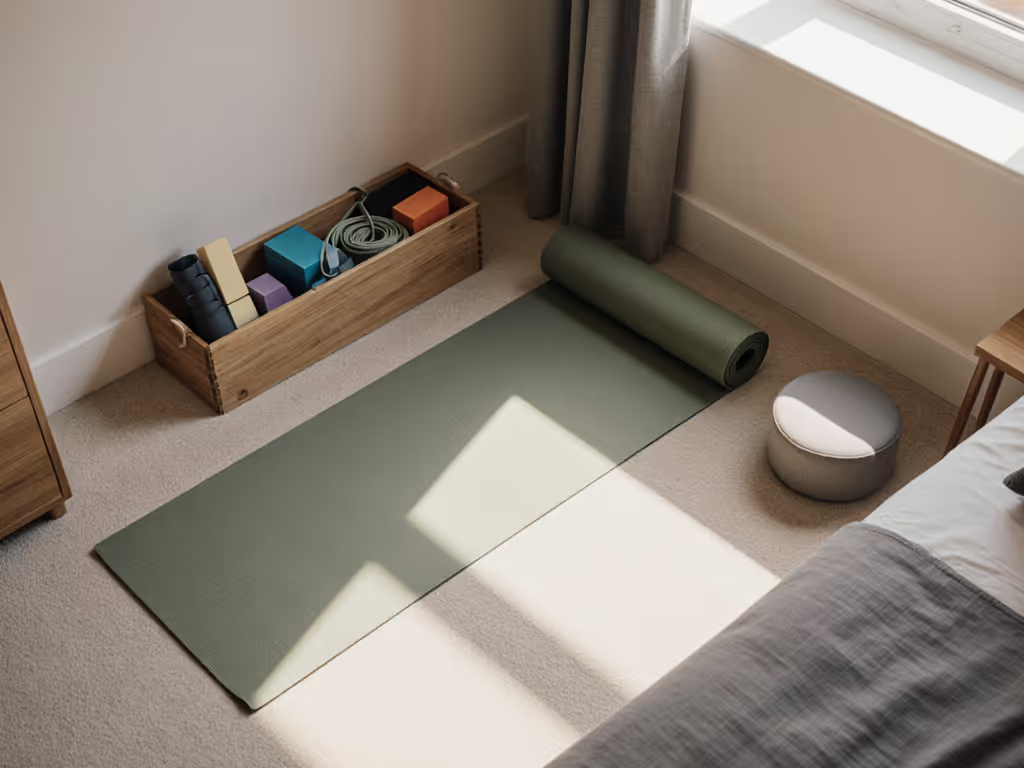
Zone 1: Practice Area (Primary). Your yoga mat footprint. Ensure 2 feet of clearance on all sides for arm extensions and stepping backward into lunges. In a 10' × 10' bedroom, place the mat along one wall, leaving the path to the door clear.
Zone 2: Props Storage. A small basket or shelf holding blocks, straps, and bolsters. Keeps clutter off the floor and props within arm's reach. Explore space-saving home gym storage options that keep gear tidy in tight rooms.
Zone 3: Buffer Zone. Don't practice directly adjacent to a wall or furniture. Sound and vibration can amplify against hard surfaces.
Ceiling Clearance Check: Stand in your practice area and reach overhead. Your fingertips should clear the ceiling by at least 6 inches (15 cm). If not, tailor poses to avoid overhead presses or full sun salutations.
Yoga itself is quiet compared to strength training. However, in noise-sensitive settings, even soft sounds carry.
For reference: a whisper is ~30 dB; normal conversation is ~60 dB. If you practice in an upstairs apartment, keep noise below 40 dB at 1 meter to avoid neighbor friction.
Why this phase works: These pieces are silent, portable, and multifunctional. You can practice full yoga and light mobility work. Total footprint: negligible storage footprint.
When to add: After one week of practice, if you notice vibration or hear yourself downstairs. This layer is your neighbor-protection upgrade.
Why now: Once you've established a routine, recovery tools boost results. Their quiet nature means zero noise risk. For quiet flexibility tools and routines, see our noise-conscious mobility gear guide.
Building a quiet home yoga practice in a small space isn't about buying the most expensive mat or filling the room with props. It's about understanding your room's transmission, choosing gear that isolates vibration, and stacking layers intentionally. Quiet is a feature, and when your neighbor finally stops knocking, you'll know you've got it right.
Start with measurement, add cushion, then let the room tell you what's next.