Training & Programming with Limited Equipment
Posture Home Gym Setup: Step-by-Step Desk Fixes
24th Apr•6 min read
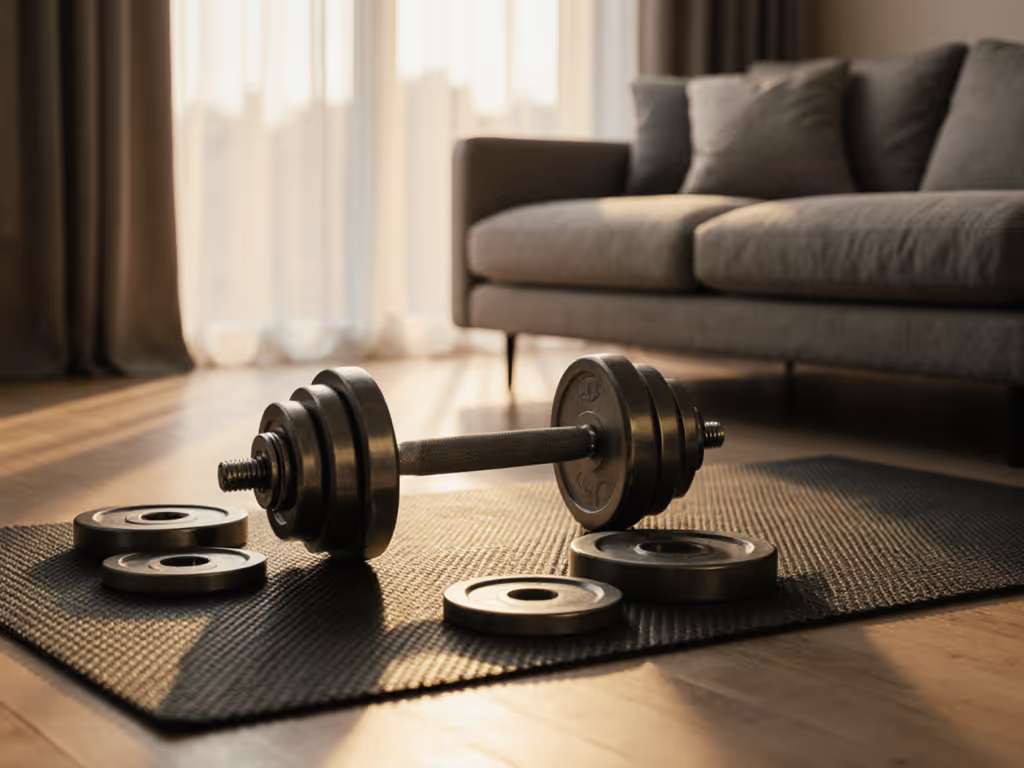
A REP fitness adjustable dumbbell and minimal equipment strength programming can deliver measurable progress in constrained spaces, but only if you anchor your approach to repeatable protocols, not marketing claims. If you're comparing adjustable options, our Bowflex vs PowerBlock comparison breaks down weight range, speed of adjustment, and durability for small spaces. I've spent enough weekends A/B testing equipment (pulleys, racks, barbell knurls) while tracking vibration-in-glass readings and decibel logs that I've learned one cardinal rule: the quietest, smallest tool that meets your actual range often outperforms the theoretical maximum. In apartments, shared garages, and bedrooms where your neighbors or sleeping partner are a floor away, this matters more than spec sheets ever signal.
This guide walks through how to structure genuine strength progression with a single adjustable dumbbell, where the focus shifts from what you lift to how you manage load variation and movement quality within a real room's constraints.
Before you program a single rep, log your setup. A single dumbbell occupies roughly 2-4 square feet when in use (accounting for arm swing clearance). More critical: where do you place it between sets? If it's mid-room and your ceiling or wall is thin, each set drop registers. I once tested three different adjustable systems in a 10×12 bedroom and found that noisy plate-drop mechanisms cost 3-5 decibels per set, enough to wake someone two rooms over. For room-specific fixes and timing strategies, see apartment gym noise control.
What to document:
Scores reflect real rooms. A dumbbell system that allows silent, tool-free weight swaps (like flip-switch designs) isn't luxury, it's engineering that respects your environment and recovery cycles.
The sweet spot for beginners and intermediate lifters is a dumbbell that spans 10-60 lbs in adjustable increments. This range covers:
A dumbbell that can flip between 5 weights (say, 5, 15, 30, 45, 60) handles roughly 80% of home strength programming. The remaining 20% is accessory finesse, which adjustable micro-plates handle. Verify that weight changes happen without a cradle or tools; otherwise, you'll lose 30-60 seconds per set and abandon drop sets when fatigue sets in[5]. Then build sessions using our limited-equipment workout guide that prioritizes progression over gear.
With one dumbbell, prioritize compound movements (lower body, back, pressing) and unilateral variations (single-leg/single-arm) to create balanced load distribution.
Lower Body
Upper Body
Additional Posterior Chain Finisher
Each movement trains a distinct pattern and body region. This prevents imbalance and keeps total session time under 45 minutes, critical for consistency in tight schedules.
Drop sets multiply work volume without adding weight or crowding your space. The protocol is straightforward[1]:
For exercises requiring balance, like Bulgarian split squats and single-leg Romanian deadlifts, prioritize form preservation over grinding out reps. A rep with compromised position teaches poor movement, not strength[1].
On movements like step-ups or exercises where weight swaps delay the drop set, maintain a steady pace and 3 sets of solid reps instead. The time cost of plate adjustments can exceed the benefit if your dumbbell swap is clunky.
For hypertrophy (muscle growth and definition), train in the 8-15 rep range, ensuring the last 2-3 reps feel challenging[3]. This builds size and work capacity more efficiently than heavy, low-rep strength work in cramped quarters.
For pure strength (max output), drop to 6-8 reps on compound movements like deadlifts and use longer rest (2-3 minutes between sets). However, minimal spaces and single-dumbbell limitations make this secondary to hypertrophy work.
Programming anchor:
Progressive overload, increasing tension or volume over time, drives strength gains. Learn how to break home gym plateaus with progression methods that don't require buying new equipment. With a single dumbbell, three levers move the needle:
Increase Reps: If goblet squats feel light at 10 reps, target 12 reps for 2 weeks. Once achieved, nudge weight up.
Add Sets: Move from 2 sets to 3 sets of Bulgarian split squats. Density (more work in the same time) is a form of overload.
Deploy Drop Sets: Layer in a drop set to familiar movements. A single drop set per compound lift per week adds significant volume without requiring new equipment.
A repeatable test protocol: log reps, sets, and perceived effort on a simple spreadsheet. If reps stall for 3 consecutive sessions, either increase weight or tighten form. Form tightness, chest up on rows, neutral spine on deadlifts, often unlocks a plateau before load does.
With one dumbbell, avoid training the same movement two days in a row. A sample week:
Monday: Lower body (goblet squats, Bulgarian split squats, step-ups) Wednesday: Upper body (bent-over rows, shoulder presses, kickbacks) Friday: Lower body focus on posterior chain (Romanian deadlifts, lunges, single-leg work)
This 3-day split allows 48 hours between major muscle groups and minimizes floor impact noise spread. If you train early morning or late evening in a noise-sensitive setting, this cadence keeps decibel spikes contained.
Strength isn't only about load. Monitor:
Plain-language verdict: if you gain 2-3 reps per movement over 8 weeks, you've generated meaningful adaptation. Numbers on the dumbbell matter far less than consistent application and movement mastery.
If your ceiling is low (under 7 feet), avoid overhead pressing or use a half-press with elbows flared. If your floor transmits vibration readily, place a folded yoga mat or thin rubber pad under your feet during high-impact work like step-ups or jumping. A single pad (12×24 inches) occupies negligible space yet muffles transient spikes. For broader options and impact data, see our home gym flooring comparison.
For drop sets in noise-sensitive environments, avoid exercises where you slam the dumbbell down (overhead carries, farmer walks). Controlled lowering, an eccentric tempo of 2-3 seconds, cuts impact by 40-60% and teaches body awareness simultaneously.
Strength work isn't static. After 4 weeks, assess:
If you've outgrown 60 lbs on major lifts, you have three paths: add a second dumbbell, upgrade to a heavier system, or shift toward tempo training (slower reps) and unilateral work that adds complexity without load. Many intermediate lifters find that single-dumbbell plus bodyweight (one-arm push-ups, pistol squat progression) sustains progress indefinitely.
Quietly consistent beats loud and impressive every time. Your form improves, your room stays livable, and gains compound week to week without fanfare. That's the real measure of sustainable strength in constrained spaces.
--
Further Exploration: Consider pairing your single dumbbell with a progression checklist, print a simple log sheet to track reps, sets, and perceived difficulty. Many lifters find that written records expose plateaus faster than memory, enabling timely weight increases or form resets. You might also explore how temperature and humidity in your training space affect performance; cold muscles and stiff joints lower rep ceilings, so a pre-session warm-up minute or two yields measurable returns.