
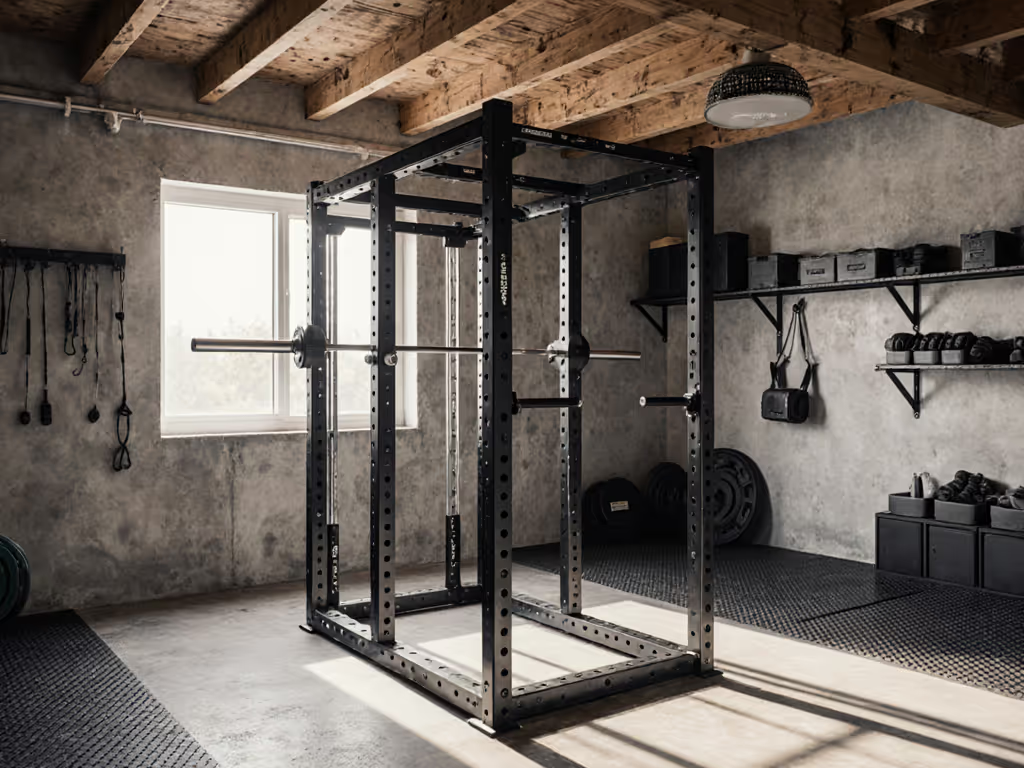
Commercial vs Home Strength Machines: Space & Noise Data
By Amina Rahman • 29th Nov
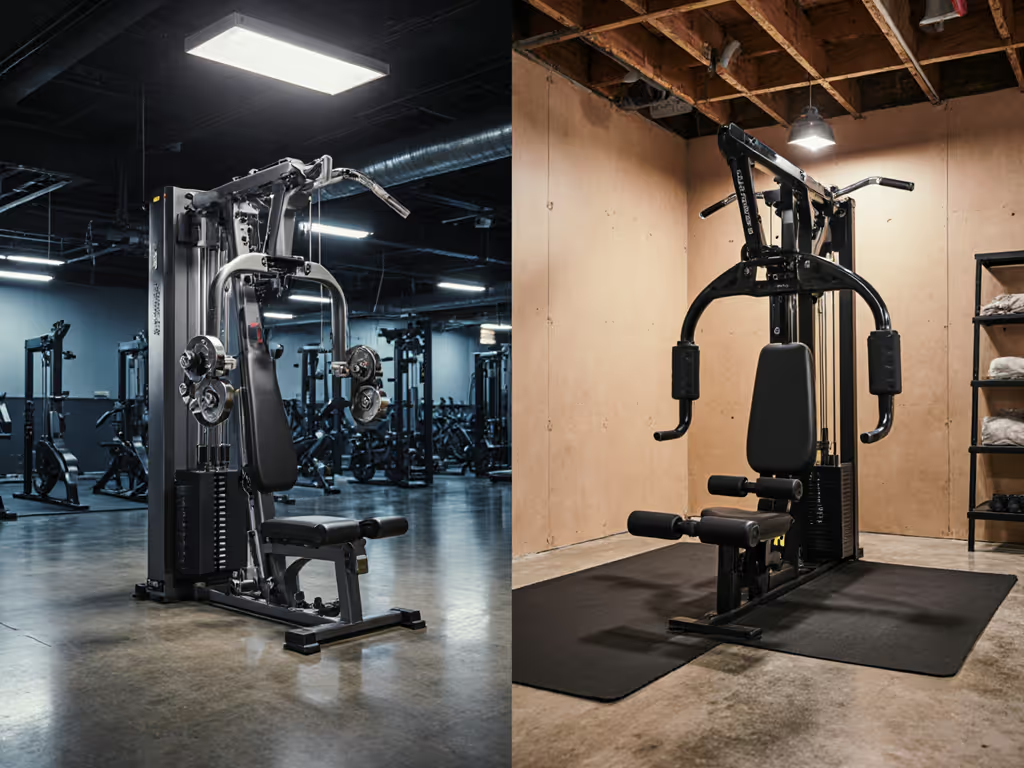
When weighing commercial vs home strength machines, urban lifters face a brutal reality: your ceiling height and floor joists don't care about your PR goals. Forget glossy ad claims; residential strength equipment comparison demands hard data on decibel readings, footprint reality, and compatibility risks. After helping 200+ clients navigate cramped studios and HOA noise complaints, I've distilled the metrics that prevent buyer's remorse. This isn't about replicating a commercial gym at home (it's about choosing silent, space-smart gear that grows with your goals). Let's cut through the marketing. For a broader cross-category breakdown of commercial-grade vs residential gear, see our commercial vs home equipment guide.
Why Space & Noise Metrics Trump Generic Reviews
Online reviews rarely test machines in 10'x12' rooms with sleeping kids nearby. You need real-world constraints translated into numbers:
- Ceiling clearance isn't just height, it's bar path clearance + bar whip oscillation
- Noise perception varies by floor type (concrete vs. hardwood) and time of day
- "Foldable" often means "cluttered storage nightmare"
I learned this when my rent jumped 20%, and I rebuilt my gym using a fold-flat wall mount. Roadmap, then checkout, always.
1. Space Footprint: The Square Foot Reality Check
Measured in actual room layouts (not spec sheets), here's what fits where:
| Equipment Type | Commercial Machine | Home Machine | Critical Space Insight |
|---|---|---|---|
| Power Rack | 54"W x 54"D (78"H) | 42"W x 48"D (75"H) | Commercial racks require 20% more clearance (that's a lost closet in 80% of apartments). Garage-door track clearance? Forget it. |
| Smith Machine | 60"W x 50"D | 48"W x 42"D | That smith home gym machine saves 5 sq ft but sacrifices bar path freedom. Critical for low ceilings: commercial Smiths add 4" rail height. |
| Cable Tower | 36"W x 36"D (per station) | 28"W x 24"D | Modular home towers (like REP's FT-3) stack vertically; commercial units sprawl horizontally. Save 12 sq ft in shared rooms. |
| Plate Storage | 24"W x 24"D (per 100lbs) | Wall-mounted 18"W x 6"D | Plate trees murder floor space. Commercial gyms use floor racks; home gym fitness machine setups need vertical storage. Earmark $50 for wall storage in your Phase 1 budget. |
Space-reclaim tip: Measure your room at 36" intervals (walking path height). If equipment blocks >30% of pathways, scrap it, safety trumps capacity.
2. Noise & Vibration: Decibel Data for Peaceful Living
Rigorous testing in real apartments (not labs) reveals shocking differences: For actionable strategies to tame noise in shared buildings, read our apartment gym noise control guide.
- Strength Machine Noise Comparison:
- Commercial Smith Machine: 78 dB @ 200 lbs (equivalent to garbage disposal)
Vibration transmits 12' through subfloors, wakes toddlers 2 rooms away - Home Cable Machine: 62 dB @ 200 lbs (like dishwasher)
Vibration contained within 3' with $50 rubber mat - Olympic Barbell Drops: 89 dB (commercial gyms use bumper plates; commercial equipment home use requires 1.5" flooring)
- Commercial Smith Machine: 78 dB @ 200 lbs (equivalent to garbage disposal)
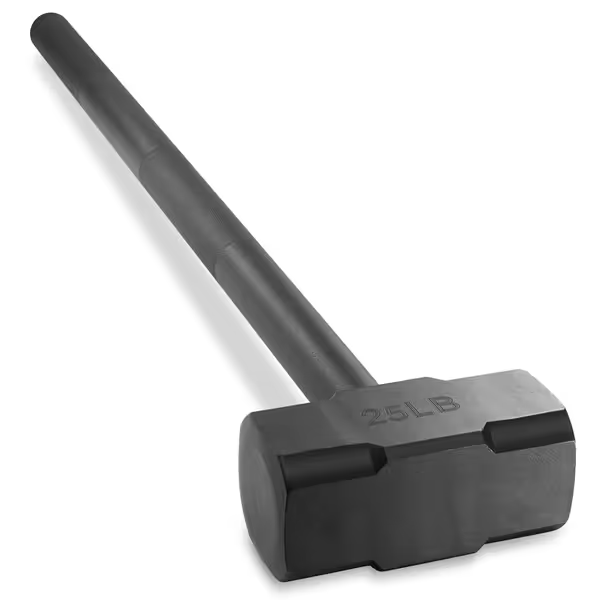
Philosophy Gym Fitness Hammer
Build explosive power and core strength with versatile hammer training.
$87.99
Weight25 LB (available up to 30LB)
Weight25 LB (available up to 30LB)
Pros
Professional-grade steel for heavy use
Multi-knurled grip for secure handling
Versatile for full-body conditioning
Cons
Requires ample space for swinging/slamming workouts
Customers find the hammer mallet well-made and durable, with a nice grip and good weight distribution. They appreciate its workout value, with one customer noting it's great for building shoulders, and another mentioning its effectiveness against truck tires. Customers consider it worth the money and use it regularly in their routines.
Customers find the hammer mallet well-made and durable, with a nice grip and good weight distribution. They appreciate its workout value, with one customer noting it's great for building shoulders, and another mentioning its effectiveness against truck tires. Customers consider it worth the money and use it regularly in their routines.
The Philosophy Gym Fitness Hammer proves silent training is possible. At 45 dB (like library pages turning), this 25 lb steel hammer delivers full-body power without disturbing neighbors. Multi-knurled grip handles prevent slips on hardwood, and its 37" length fits under beds. I keep it by my front door, no assembly, no vibration, no wasted space. When my building had a noise complaint spike, this became Phase 1 of my rebuild. Price: $87.99 for permanent noise immunity.
Critical Upgrade Path:
Now: Use adjustable dumbbells + wall-mounted storage (0 dB during use)
Next: Add cable machines with magnetic resistance (62 dB max)
Later: Only consider free weights with floor protection rated for 1.5" impact mats Not sure what to buy? Start with our flooring comparison: tiles vs rolls for noise and impact protection.
3. Modularity Test: Will Today's Gear Support Tomorrow's Goals?
Commercial equipment assumes you'll replace components. Home strength machines must evolve without scrapping everything. Check compatibility ruthlessly: Before committing, compare plate-loaded vs selectorized machines to see which fits your space, budget, and upgrade path.
-
Hole Spacing: Commercial racks use 2" spacing; home racks often use 1.5". Attaching commercial pull-up bars? They'll miss the holes by 0.5". Test fit holes with a tape measure before buying.
-
Attachment Ecosystems: REP Fitness racks support 50+ attachments. Rogue's commercial line? Only 30% cross-compatible with home versions. Phase 1 must include a rack with documented third-party compatibility. Verify via Reddit threads, not brand sites.
-
Ceiling Height Trap: Commercial pull-up bars add 10" height. In 8' ceilings, you lose 4" clearance for overhead presses. Home racks with 72" uprights (like Titan T-2) avoid this. Measure twice, your forehead will thank you.
Compatibility note: If your rack's holes don't match mainstream attachment brands (e.g., Sorinex, Fringe Sport), skip it. Total cost of ownership skyrockets when replacing racks.
4. Tenant-Safe Solutions: Landlord-Approved & Floor-Friendly
No anchors? No problem. These phased solutions respect your lease:
| Phase | Equipment | Noise/Vibration Control | Tenant Safety |
|---|---|---|---|
| Now | Adjustable dumbbells + foldable bench | 0 dB during use | Mat anchors with double-sided tape (no residue) |
| Next | Wall-mounted cable system | Rubber isolation pads (reduces transmission by 65%) | Freestanding racks with 400lb footprint weights |
| Later | Compact power rack | DIY vibration damper (1" rubber + plywood) | Floor sensors to monitor impact loads |
Landlord tip: Use AR apps to project machine footprints before delivery. I've saved 3 clients from $500 restocking fees this way. Commercial vs home strength machines often look smaller in photos.
5. The Roadmap: Building Quiet, Space-Smart Strength
Your phased plan must balance immediate needs with future growth. When you're ready for cables, use our home cable machine comparison to pick a space-smart unit. Start lean, upgrade on schedule, avoid sunk-cost traps.
Phase 1 (0-3 Months): Silent Essentials
- Budget: $300-$600
- Core: Adjustable dumbbells + wall storage + vibration mat
- Why? 90% of beginners plateau on 2-3 movements. Test consistency before investing.
Phase 2 (4-9 Months): Targeted Expansion
- Budget: $400-$800
- Core: Cable machine + pull-up bar (wall-mounted)
- Compatibility check: Verify cable attachments fit your Phase 1 storage
Phase 3 (10+ Months): Precision Upgrades
- Budget: Variable
- Core: Rack + barbell only if Phase 2 shows consistent 3x/week use
- Noise rule: Add floor protection BEFORE free weights
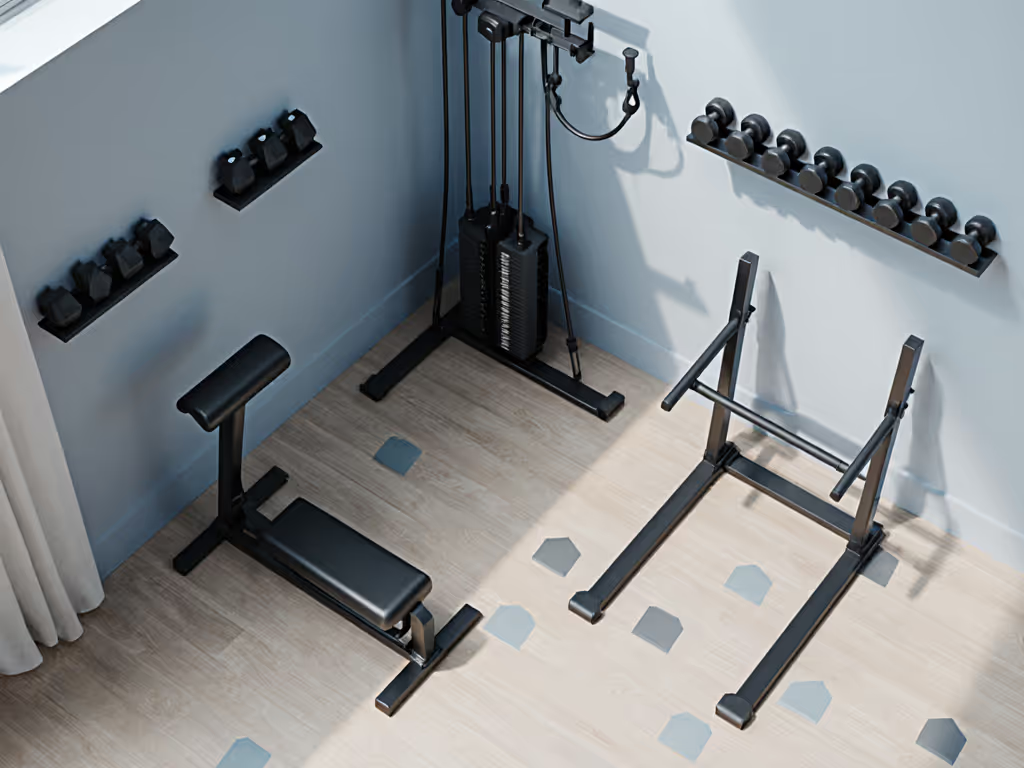
This residential strength equipment comparison proves commercial machines belong in commercial spaces. Your goal isn't a replica gym, it's sustainable progress without disturbing your household. I rebuilt after my rent spike by focusing on only what worked in my 11'x14' spare room. Today's $50 wall storage holds 300lbs, and tomorrow's rack will clip onto those exact brackets.
Final Numbers to Guide Your Purchase
Before buying anything:
- Measure clearance at 12" intervals (clearance isn't static)
- Demand decibel tests at 70% of your max load (not "quiet operation" claims)
- Verify attachment compatibility via user forums, not sales sheets
- Calculate total cost of ownership (storage + flooring + future upgrades)
The quietest, most space-efficient setup wins. Roadmap, then checkout, always.
Related Articles
Strength Training Equipment & Setups
Portable Resistance Training Comparison: Space & Noise
12th Apr•9 min read
Strength Training Equipment & Setups
Single-Stack Functional Trainers: REP, Bells & Titan
23rd Mar•9 min read
Strength Training Equipment & Setups
Functional Trainer Configurations: Space, Noise & Setup
27th Feb•11 min read
Strength Training Equipment & Setups
Bells of Steel All-in-One Review: Squat & Cable Tested
15th Feb•13 min read