
Bells of Steel All-in-One Review: Squat & Cable Tested
By Amina Rahman • 15th Feb
The Small-Space Strength Paradox
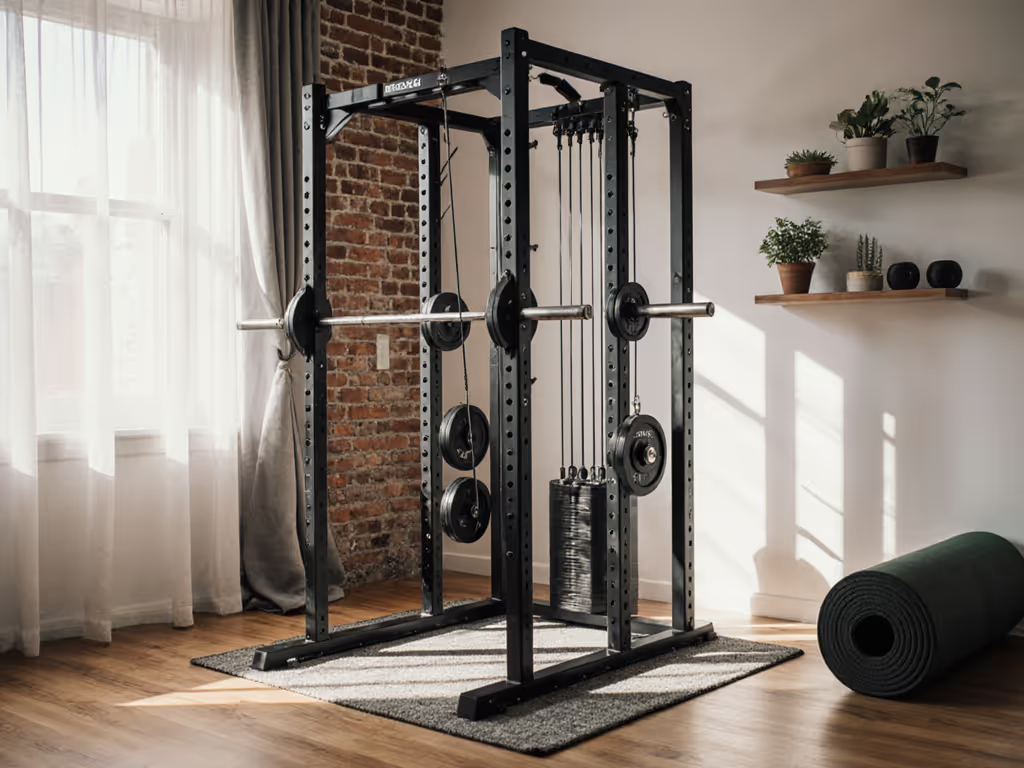
You want a Bells of Steel All-in-One review that actually matters, not because another brand promised miracles, but because your apartment, basement, or shared garage has hard limits. You're looking for a best home gym solution that earns its footprint by collapsing five machines into one, doesn't rattle the floor below, and doesn't trap you in buyer's remorse when your goals shift. The challenge: most functional trainers either monopolize floor space, demand commercial-grade infrastructure, or compromise on barbell performance. The Bells of Steel All-in-One claims to thread that needle. Let's test whether it actually does.
Problem: Space Doesn't Forgive Poor Equipment Choices
Renting or living in a space where square footage costs real money reshapes how you think about home equipment. Every piece must pull double duty. A bulky cable tower that does only cable work, a rack that occupies a corner for years with nothing bolted to it (these are clutter factories masquerading as investments). The typical cable trainer needs 8-12 feet of floor to function safely; throw in a squat rack, lat pulldown machine, and a bench, and you've carved out a dedicated gym room. Most people don't have that luxury.
The agitation is sharper if you're noise-conscious. Thin floors, sleeping kids, neighbors on the other side of a shared wall, or an HOA with quiet hours. These aren't niche concerns. For practical ways to keep neighbors happy, see our apartment gym noise control guide. They're the invisible ceiling on when and how hard you can train. A machine that vibrates, clunks, or demands heavy impacts becomes a source of guilt, not progress.
Then there's modularity anxiety. Will today's purchase play nice with tomorrow's attachment? Will you be locked into one ecosystem, or can you add a J-cup, swap in a specialty pad, or sell an unused component without taking a loss? The best home gym isn't the one with the most features, it's the one that grows as your training evolves, without waste.
Solution: The All-in-One Trainer as a Phased Starting Point
The Core Platform: Footprint & Versatility
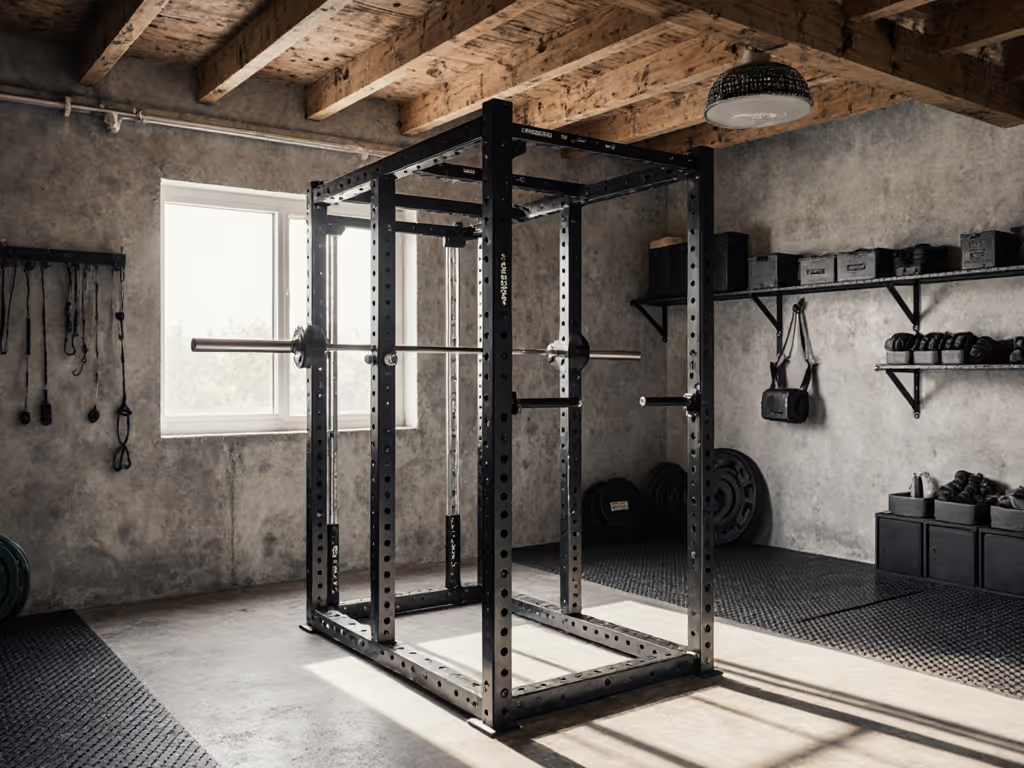
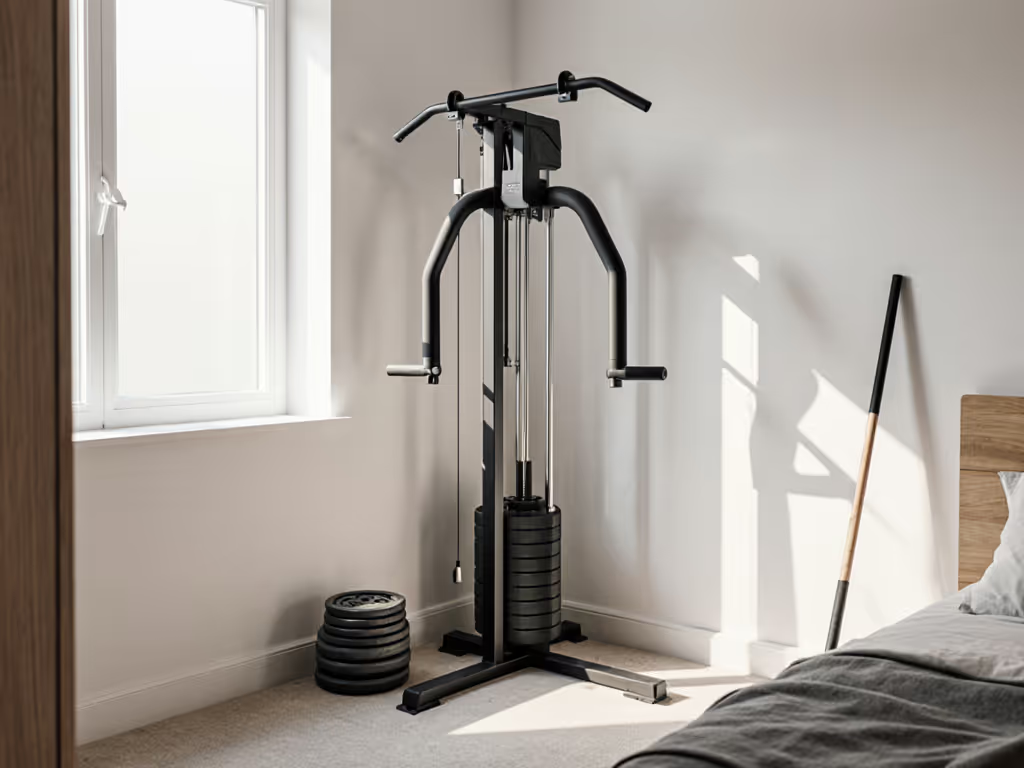
The Bells of Steel All-in-One squeezes a squat stand, functional trainer, and lat/low-row station into a compact 4' × 4' footprint. That's roughly the floor space of a filing cabinet standing upright, yet it handles over 100 exercises. The architecture stacks three cable systems vertically: two side pulleys (2:1 ratio for isolations like curls and tricep pushdowns) and a center stack (1:1 ratio for heavier back work like lat pulldowns and rows).
Why this matters for your space: the x-style frame and built-in storage leverage corner placement efficiently, reclaiming dead zones. If your garage or spare room has wasted corner real estate, this design slots in rather than sprawling across the middle. Simple, clean, effective.
Build & Stability: The Quiet Test
The unit is constructed from 12-gauge steel throughout, with aluminum pulleys for smooth, consistent movement. User testing confirms that cables track smoothly without drag, and the 1:1 center stack feels stable enough for heavy rows. One verified owner noted: "I have had this trainer for about 10 months and I have been extremely happy. I had limited space (1/2 of a 1 car garage) and wanted to maximize the space and still have the ability to perform barbell based exercises as well as cables. I have found the All in One Trainer to be stable enough when bolted down to accommodate my needs for squatting and benching with no concerns."
Regarding noise: the aluminum pulley system and smooth cable routing deliver consistent, quiet resistance through every rep. Unlike machines with metal-on-metal clanking or jerky weight stacks, the All-in-One's design favors fluid tension over impact noise. This is not a loud cardio machine; it's cable-based, so vibration and floor transmission are minimal compared to treadmills or rowers. Apartment neighbors will appreciate that.
Barbell Capability: Not a Gimmick
The uprights accept standard 2.3" × 2.3" (60 mm × 60 mm) rack attachments with 5/8" holes, so you can add J-cups and convert it into a compact squat stand. This is where the "all-in-one" claim earns credibility. You're not buying a cable tower that looks like it can squat; you're buying a functional trainer with a barbell platform built in. One user reported: "I have had this trainer for a few months and I absolutely love the versatility of exercises that can be done. Adding the J-cups helped complete my home gym since I have limited space."
The trade-off: this is not a full power rack. If solo safety is a concern, review our power rack safety guide before deciding your upgrade path. It's a squat stand without catchers or full safety bars. If solo lifting safety is a priority, you'll want to run conservative percentages or use a spotter, or eventually upgrade to a rack-and-cage combo. This is where phased thinking enters: you can start here, establish your baseline, and upgrade later if overhead press or heavy squats demand cage safety.
The Modular Upgrade Path: Now, Next, Later
Now - The Base Unit (Core Investment)
Bells of Steel offers two versions: plate-loaded and weight-stack. The plate-loaded version keeps costs low and simplicity high. The weight-stack version (with pin-loaded convenience) runs higher but saves time between exercises if you train fast circuits.
Starting price hovers around $1,250 on the low end, making it one of the more affordable all-in-one trainers compared to standalone cable towers plus rack combos. For that investment, you get:
- Dual-cable system with mixed ratios for light isolations and heavy rows
- Integrated lat pulldown and low-row station
- Barbell-ready uprights
- Space efficiency for 4' × 4' footprints
- Smooth, low-vibration cable travel
Compatibility note: The frame accepts standard 5/8" hole attachments, so anything Bells of Steel makes (or compatible ecosystem brands) will bolt directly on. This is your hedge against future regret.
Next - Targeted Attachments ($200-$400)
Once the base is installed and seasoned, identify one gap in your training. That might be:
- J-cups ($50-$80): unlock full barbell squat and bench press functionality
- Specialty seat pads (Seal Row, Belt Squat platform): target weak points or address joint stress
- Upgraded handles: aluminum instead of plastic, better ergonomics for crossover exercises
One reviewer noted that crossover exercises benefit from handles with extra length to avoid topping out on the stack, so if loaded cable flies are your signature, that's a single $30-$50 accessory away. Not sure which grips to buy? Start with our cable attachment comparison for quieter, more effective options.
The philosophy here: buy once, cry once - strategically. Add attachments only when your training truly needs them, not because the ecosystem tempts you.
Later - Rack Evolution ($800-$1,500)
If 6-12 months in, you find yourself wanting a full safety cage, adjustable safeties, or standalone barbell work separate from cables, you can sell this unit (used Bells of Steel equipment holds value reasonably well) and upgrade to a half-rack or full cage. The cable tower can migrate to a secondary station, or you can retire it guilt-free without the dead-weight anchor that bulky single-purpose machines become.
Real-World Specs: What Fits Where
Space Requirements
Footprint: 4' × 4' (imagine a large home office desk)
Ceiling clearance: Not explicitly stated in specs, but cable machines typically need 8-9 feet minimum for overhead work. Verify before purchasing if your garage has low ceiling joists or pull-up ambitions.
Weight: The plate-loaded version is lighter and more mobile; the weight-stack version is heavier. Confirm the floor load limit (concrete vs. wood joists). If you're on upper floors in an apartment, the plate-loaded option edges ahead for floor safety.
Entry path: Assembly takes 5-6 hours solo. Measure your door width and stairwells to confirm the base frame (typically 4' × 4') clears your delivery route. This single check prevents return nightmares.
Cable Performance: The Ratio Divide
The two side cables use a 2:1 ratio, so when you load 100 lb, you're pulling 50 lb of force. This is ideal for isolation work (curls, flyes, tricep pushdowns) because lighter resistance improves control, full range of motion, and joint health.
The center stack uses a true 1:1 ratio, meaning 100 lb is 100 lb of force. This is essential for heavy back work (lat pulldowns, rows) where you want maximum load.
Why it matters: many cheaper cable trainers use 2:1 across the board, which limits pulling strength. The All-in-One's mixed ratios mean you're not sacrificing heavy row capability for cable isolation ease. A fact confirmed by user feedback and reviewed favorably by independent testers. For a broader look at alternatives and pulley ratios, check our home cable machine comparison.
Weight Stack Capacity
The weight-stack version features dual 200-pound stacks with a 2:1 ratio, effectively 100 pounds of force per side. For hypertrophy and general strength, this is adequate. For heavy strength athletes or competitive lifters, the plate-loaded version offers unlimited load (you bring your own plates). This flexibility is crucial if your goals shift toward powerlifting or if you're already strong and plan to test maxes.
Construction & Durability
12-gauge steel throughout and aluminum pulleys earn a 4.5 out of 5 for construction and durability, with cable travel rated 4 out of 5 for smoothness. Users report smooth, drag-free movement over 10+ months of hard use.
One minor note: the weight stack benefits from silicone lube applied to the rods periodically to maintain smooth operation. This is a 2-minute maintenance task, not a red flag, but worth knowing upfront. Use our home gym maintenance blueprint to set simple cleaning and lubrication schedules. Easy win.
Assembly Reality Check
The assembly process is well-diagrammed and intuitive; most solo lifters complete it in 5-6 hours. However, the manufacturer's YouTube assembly video is essential - don't skip it. The instruction manual alone leaves gaps. Budget a full weekend and have a clear space to stage parts.
The Noise Question: Urban & Shared-Space Reality
For renters in apartments, townhomes, or homes with light sleepers, noise is non-negotiable. The All-in-One's smooth cable system and minimal vibration translate to quiet operation compared to stack machines with moving metal weights or racking systems. Cable isolation work (curls, flyes) is silent. Lat pulldowns are quiet. Even heavy rows, the highest-impact movement on this machine, are muted by the cable-and-pulley design and the equipment's bolted-down stability.
Unlike a plate-loaded leg press or a barbell squat rack (where you rack weight plates with audible impact), the All-in-One keeps noise at a whisper. If you drop plates or unload bars loudly, that's on you, not the machine. But the apparatus itself is not a floor-vibration source.
Bottom line for noise-conscious spaces: This machine is apartment-friendly, especially if you use rubber-coated plates and load/unload plates quietly. It's not silent (no strength equipment is), but it's among the quietest full-body platforms on the market.
Cost of Ownership: The Phased Budget
Initial investment: $1,250 (plate-loaded, no attachments)
Realistic first-year spend:
- Base unit: $1,250
- J-cups (if barbell work is priority): $75
- Upgraded handles (optional but recommended): $50
- Total: ~$1,375
For comparison, a standalone cable tower ($600-$800) plus a squat rack ($400-$700) plus a bench ($200-$400) lands you at $1,200-$1,900, without the integrated lat/row station. The All-in-One delivers more capability per dollar and reclaims floor space in the process.
Resale consideration: Bells of Steel equipment holds value better than disposable brands. If you sell 18 months in (because your goals shifted or you're upgrading), expect to recover 60-75% of your investment. This hedge makes the effective cost of a 1-2 year trial run closer to $300-$500, not $1,250.
Who This Machine Serves (and Who It Doesn't)
Ideal Fit
- Renters and homeowners with 100-200 sq ft of usable gym space
- Lifters doing hypertrophy, general strength, or functional training (not competitive powerlifting)
- Solo trainers who value space efficiency and quiet operation
- Beginners and intermediate lifters still discovering their programming style
- Anyone who wants barbell and cable work without doubling equipment
Less Ideal
- Elite strength athletes chasing 1-rep maxes (you'll outgrow the weight-stack version quickly)
- Full-time competitors needing a dedicated power rack and loaded platforms
- Lifters with multiple family members who need simultaneous workout stations
- Anyone with ceilings under 8 feet if pull-ups are central to programming
Actionable Next Steps
If You're Seriously Considering This
- Measure your space: Confirm the 4' × 4' footprint fits, and verify ceiling height (8+ feet ideal). Check door width and stairwell dimensions for delivery. Print the spec sheet and use painter's tape to outline the footprint in your actual space.
- Choose your starting version: Plate-loaded if you value low cost and unlimited load potential; weight-stack if you train fast circuits and want convenience. Start with whichever aligns with your current training, knowing you can evolve later.
- Plan one attachment for month 3: Don't buy add-ons on day one. Identify the one gap (J-cups for squats, specialty pad for joint work, upgraded handles) that will unlock the most training value. Reserve $75-$150 in your budget.
- Prepare for assembly: Block a full Saturday, clear your floor space, and have the YouTube video queued before the freight arrives. Solo assembly is doable but requires focus and patience.
- Test the return window: Confirm Bells of Steel's return policy before purchase. Know that assembled equipment is rarely returnable, so decision confidence matters. Many users report that once installed, they keep the machine (a sign of satisfaction, not entrapment).
If Space or Budget Is Tighter
Consider starting with a wall-mounted cable trainer ($400-$600) to prove the value of cable work. If you love it after 6 months, upgrade to the All-in-One. This phased approach costs more over time but reduces the risk of overspending on a machine that doesn't fit your actual training.
Final Verdict
The Bells of Steel All-in-One is a thoughtfully engineered compromise for space-constrained lifters. It doesn't promise miracles or unlimited barbell strength, but it delivers what it advertises: barbell and cable functionality in a 4' × 4' footprint, with smooth, quiet operation and an upgrade-friendly frame.
It's best suited for renters, shared spaces, and planners who think in phases. You buy the base, prove the concept, add one targeted attachment, and make an informed decision about whether to upgrade or stay. That's the opposite of sunk-cost trap. Start lean, upgrade on schedule, avoid clutter, and in 12 months, you'll either have the centerpiece of a thriving home gym or clarity on what comes next.
Related Articles
Strength Training Equipment & Setups
Portable Resistance Training Comparison: Space & Noise
12th Apr•9 min read
Strength Training Equipment & Setups
Single-Stack Functional Trainers: REP, Bells & Titan
23rd Mar•9 min read
Strength Training Equipment & Setups
Functional Trainer Configurations: Space, Noise & Setup
27th Feb•11 min read
Strength Training Equipment & Setups
Bowflex Max Total Review: Space-Smart Dual Resistance Analysis
7th Dec•10 min read