Home Gym LayoutsHome Gym Layouts

Vestibular Disorder Home Gym: Safe Balance Equipment Guide

By Priya Natarajan20th Jan
Vestibular Disorder Home Gym: Safe Balance Equipment Guide

If you're navigating a vestibular disorder at home, creating a safe space for gentle movement can feel overwhelming, especially when space is tight and noise concerns loom large. For apartment dwellers, our apartment gym noise control guide shows practical soundproofing fixes that keep peace with neighbors. Your vestibular disorder home gym shouldn't add stress to your day; it should reduce it. The right strength training equipment creates consistency without complexity, turning your living space into a sanctuary for steady progress. I know this well from helping my parents transform their cramped living room into a five-days-a-week routine zone during lockdown (just resistance bands, a mat, and silent tempo timers that vanished into a basket after sessions). Small wins compound when your space lowers friction daily.

Why Standard Home Gyms Fail for Vestibular Needs

Most home gym advice focuses on power and performance, ignoring the delicate balance needs of vestibular challenges. Heavy iron clangs, complex setups, and crowded layouts increase anxiety, not stability. When dizziness strikes, you need:

  • Clear sightlines to stable reference points
  • Ample space for sudden balance corrections
  • Equipment that won't shift or wobble during subtle movements
  • Zero auditory distractions that worsen symptoms

Quiet confidence compounds when your environment supports rather than challenges your nervous system.

Five Essential Equipment Principles (Your Plain-Language Checklist)

1. Prioritize Soft-Landing Surfaces

Rubber flooring transmits vibration that can trigger vertigo; see our soundproof flooring comparison for quieter alternatives. Instead, choose:

  • 3/4" puzzle mat systems with shock-absorbing foam cores (not solid rubber)
  • Non-slip woven rugs over hard surfaces (prevents sliding during weight shifts)
  • Foldable traction pads for balance exercises (store flat when not in use)

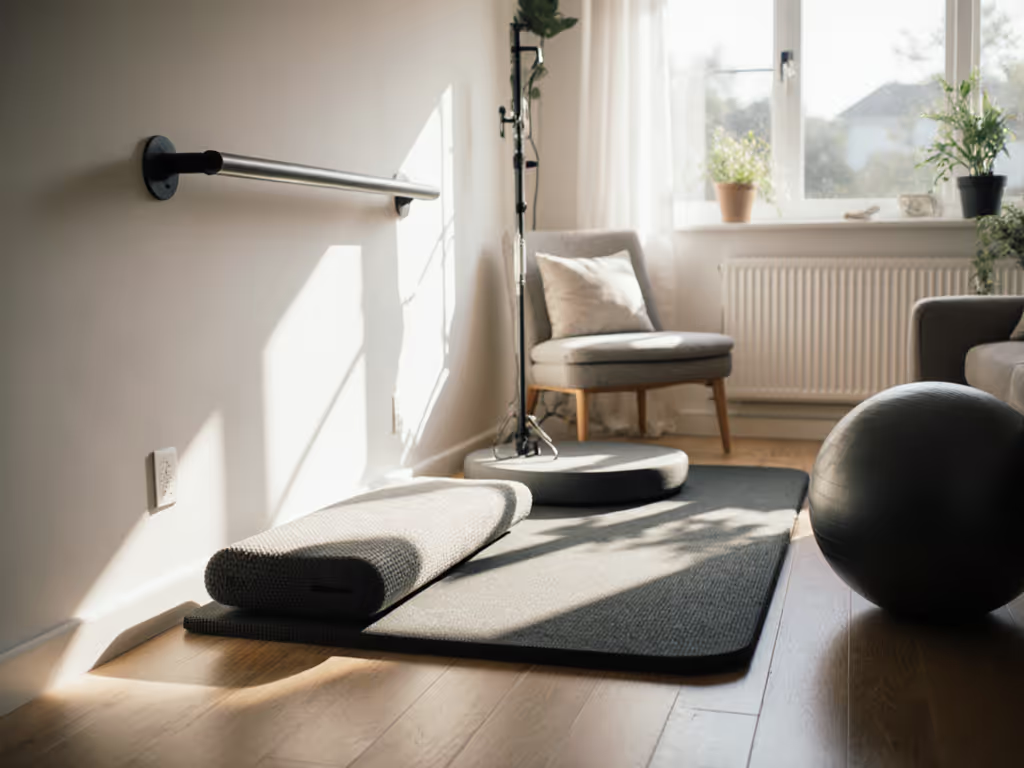
Do-This-Now Box: Place your primary exercise zone within arm's reach of two stable anchor points: a sturdy chair and a wall-mounted grab bar (no drilling required with pressure-mounted versions).

2. Choose Silent Resistance Systems

Ditch clanging weights for these vestibular-friendly alternatives:

  • Loop resistance bands (fabric, not latex for quiet tension changes)
  • Isometric hand grippers (zero movement, builds stabilizer strength silently)
  • Adjustable ankle weights (start with 0.5 lb increments for subtle challenges)

Noise etiquette tip: Test resistance equipment by performing slow movements near a glass of water, and if you see any visible ripple it is too disruptive for sensitive vestibular systems. To choose bands that stay quiet yet effective, see our resistance band guide.

3. Implement Reset Rituals for Mental Clarity

Clutter triggers anxiety. Design everything to disappear in 60 seconds:

  • Band basket system: Assign one decorative basket for all bands and small weights
  • Wall-mounted fold-down shelf: Stores timers and eye focus cards flat against the wall
  • Shoe organizer hack: Clear pockets hold exercise cue cards and vibration timers

During lockdown, this 'vanish routine' let my parents reclaim their living room instantly: no equipment guilt, just clean space.

4. Optimize Visual Anchors

Your eyes need stable reference points during exercises. Create these:

  • Fixed gaze targets: Mount small contrasting shapes at eye level on walls
  • Floor markers: Use removable washi tape to mark stance positions
  • Peripheral guides: Place low bookshelves at standing zone edges (provides subtle visual boundaries without obstruction)

5. Control Movement Amplitude

Vestibular exercises require precise motion ranges. Use these tools:
  • Silent tempo timer apps (set vibration-only alerts for head movement duration)
  • Door-mounted head turn guides (removable adhesive strips showing safe rotation limits)
  • Foam wedge supports (for seated exercises that prevent sliding)
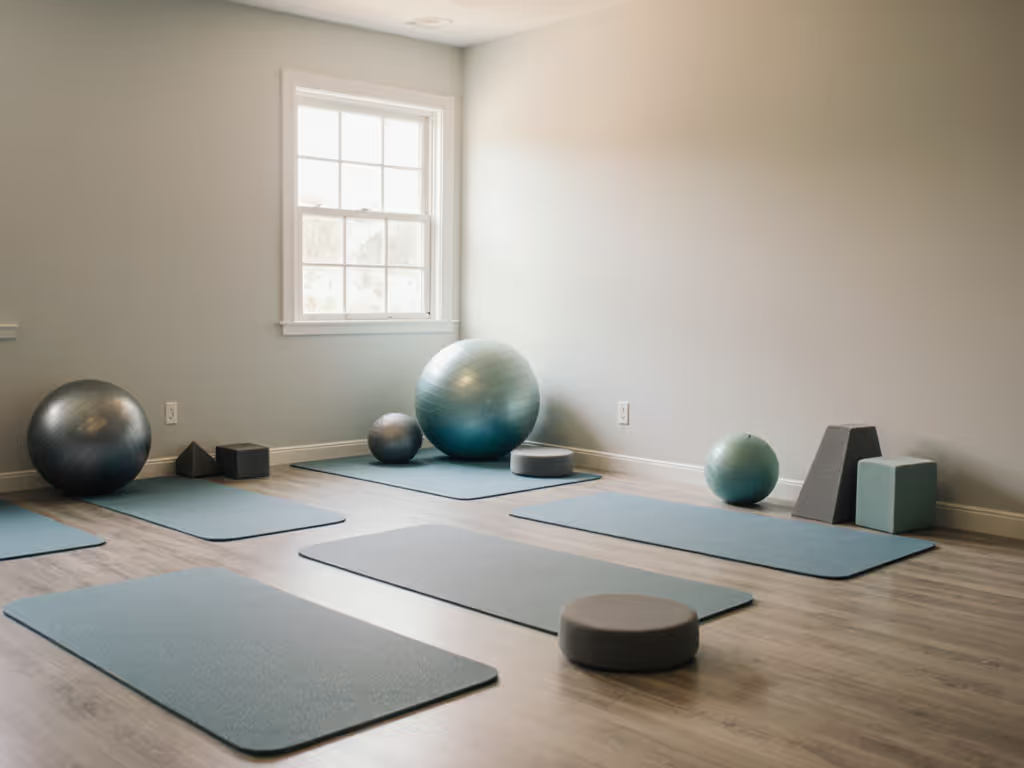
safe_vestibular_home_gym_setup_with_clear_space_and_soft_equipment

Space Optimization: Your 5-Step Room Reset

Transform any corner into a vestibular-safe zone:

  1. Clear a 6'x6' zone (minimum) with two stable reference points at opposite corners
  2. Layer flooring (carpet pad + puzzle mats for vibration absorption)
  3. Place anchor items first (chair, wall bar) before adding equipment
  4. Store all gear below eye level (reduces visual clutter that worsens dizziness)
  5. Add a single focal point (calming nature print at eye level for gaze stabilization)

This approach mirrors what I used with my parents: no neighbor complaints, no equipment guilt, just consistent progress. For a full checklist to prevent falls and manage emergencies, follow our home gym safety protocols. Consistency beats complexity when dizziness threatens your routine.

Your First 30-Day Setup Plan

Month 1 focuses on frictionless consistency, not equipment collection. Here's your phased approach:

Weeks 1-2: Foundation Phase

  • Use existing furniture (dining chair for seated exercises)
  • Download a free vibration timer app (set to silent mode)
  • Place one visual target on a wall (post-it note works)

Weeks 3-4: Integration Phase

  • Add one resistance tool (fabric loop band or isometric gripper)
  • Install a pressure-mounted grab bar
  • Create your 'vanish basket' for daily reset

The goal isn't perfect equipment: it's perfect practice. Five minutes daily with minimal gear trumps hour-long sessions requiring complex setups.

Noise Etiquette for Shared Spaces

Morning/Evening Protocol

  • Before 8 AM/After 9 PM: Use seated exercises only (no standing balance work)
  • With sleeping children: Place foam under any equipment that touches floor
  • In apartments: Schedule head movement exercises when downstairs neighbors are least active (check community boards)

Conflict-Proof Communication

Keep a "training schedule" sticky note on your door showing:

  • Session duration (max 25 minutes)
  • Exercise type ("seated only"/"standing")
  • Quiet signal (green/red card indicating noise level)

Take Your Actionable Next Step Today

Before buying anything, complete this 5-minute room audit:

  1. Stand in your intended space. Does head movement have 360° clearance?
  2. Place one hand on a wall and close your eyes. Can you maintain balance?
  3. Walk the perimeter. Is there a clear escape path if dizziness strikes?
  4. Test noise levels by shaking keys near floor level. Can you hear it in adjacent rooms?
  5. Set up your 'vanish basket' with current household items (towels for mats, books for weights)

This simple audit identifies 80% of vestibular home gym risks before you invest time or money. For gentle, medically guided tools that fit tight spaces, see our quiet home rehab equipment guide. Start here, build slowly, and let your quiet confidence compound through consistent, safe movement. Your journey isn't about dramatic equipment: it's about designing dignity into every step.
Related Articles