Buying Guides by Audience & Goal
Good Home Gym Equipment For Quiet Muay Thai And Thai Boxing
21st May•15 min read
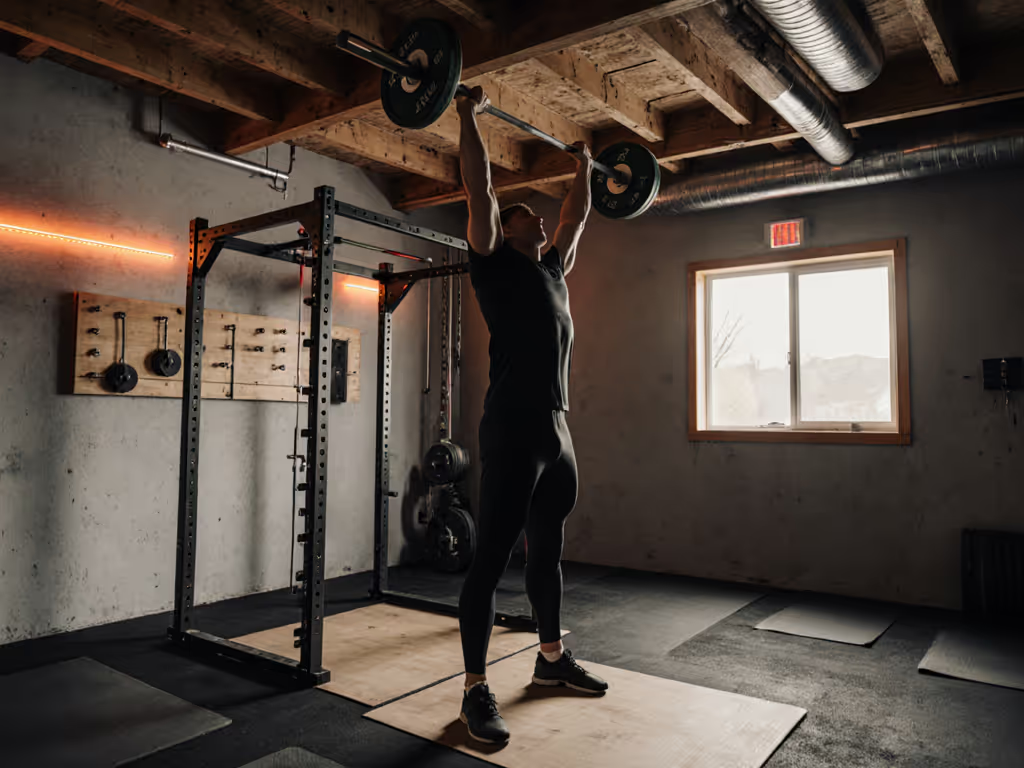
When designing a home gym for a tall user gym setup, overlooking ceiling clearance isn't just inconvenient, it is the silent motivation killer. I've seen countless 6'3"+ lifters abandon their racks after weeks because overhead presses clipped joists or pull-up bars forced chin-to-ceiling collisions. The fix isn't always higher ceilings; it is designing around constraints with human factors in mind. Because when clutter and spatial friction vanish, if it looks calm, it trains calm (a rhythm proven in everything from noise-sensitive apartments to cramped basements).
This guide cuts through guesswork with home gym height considerations distilled from hundreds of spatial audits. We'll focus on actionable metrics, not generic advice. For tall lifters, "standard" equipment specs often fail, here is how to adapt.
Forget "8 feet is enough." For lifters over 6 feet, reach envelopes and clearances require precise calculation. Stand straight, arms fully overhead. Measure from floor to your knuckles plus 8-10 inches (the barbell's plate diameter during presses or pull-ups). This is your minimum functional clearance.
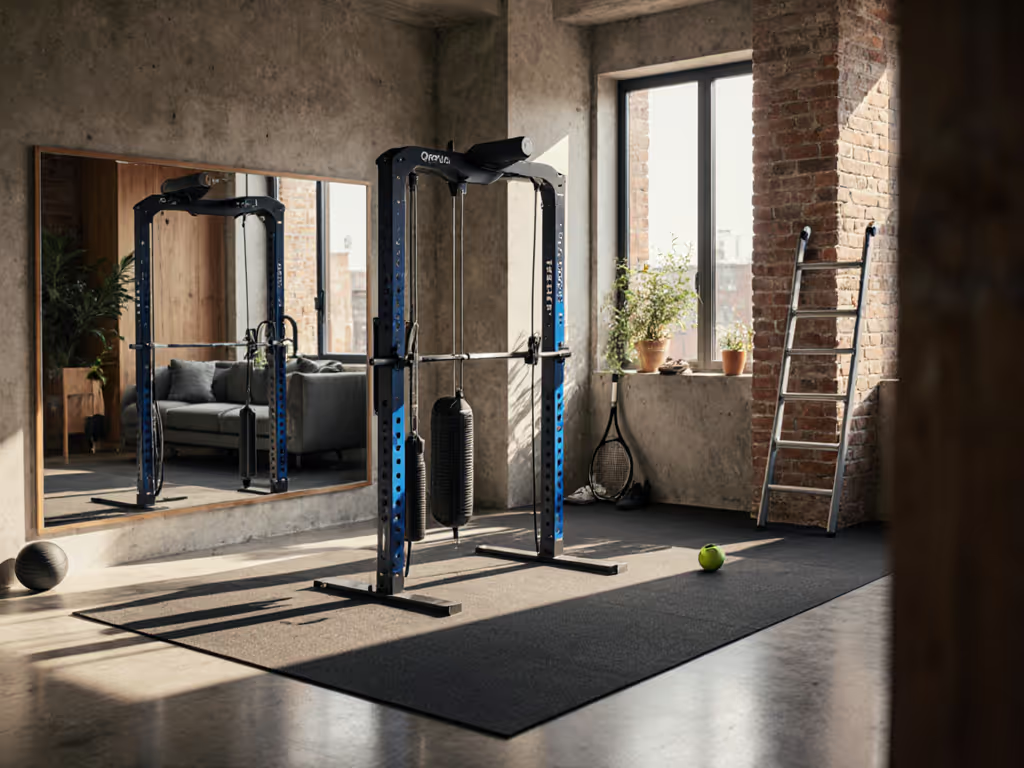
Example: A 6'4" lifter (76") needs 88-89" (7'4"-7'5") under the bar for presses. Most standard 8-foot ceilings (96") seem adequate, but drop 2 inches for floor joists, lighting, or HVAC, and you're scraping plates against drywall. This is where long limb workout modifications begin: swapping Olympic bars for thinner-profile training bars, or angling racks to avoid ceiling obstructions. If overhead work still feels cramped, consider compact cable machines that reduce barbell clearance demands while preserving full ROM. In one client's attic gym, rotating a power rack 90 degrees away from sloped rafters freed 5 critical inches, and suddenly presses flowed without head ducking.
Yes, but with height-aware selections. Most racks range 80-96" tall (6.7-8 ft), but tall lifter equipment needs demand scrutiny:
The critical metric is not the rack's total height, it is the vertical space between the bar and ceiling during your highest movement. Measure this after installation.
Basements, garages, or converted closets often live in the 6.5-7 foot range. Tall user gym setup constraints here demand creativity, not compromise:
One client's 6'8" frame struggled in his 7-foot basement until we mounted storage between studs on the sole clear wall. Removing floor clutter visually expanded the space, and he trained 3x more weekly. Sloped ceilings? Work with the pitch. Anchor racks where headroom peaks, even if it means placing the bench perpendicular to the door. Flow first.
Storage density metrics are critical for tall users, since cluttered floors force you to crane your neck, disrupting posture during lifts. Aim for vertical storage that enhances clearance:
Light temperature notes impact perceived space. In low-ceiling rooms:
Before buying equipment, test movements in your space. Hold a broomstick overhead; jump rope; simulate pull-up hangs. Note where your limbs intersect with physical limits. Posture-friendly cues like "chin tucked, shoulders down" reduce required headroom by 2-3" versus slumped form. Track these micro-clearances. They define trainability more than any "minimum height" chart.
Your room's height isn't a barrier, it is data. With precise spatial planning, even a 7-foot ceiling becomes a functional launchpad. I've engineered adherence spikes in 6'6" spaces purely by reducing visual noise and optimizing clearance per lift. Because when the room invites movement instead of fighting it, training becomes effortless. If it looks calm, it trains calm, and that is where consistency lives.
Flow first: the room should invite training, not clutter.