Buying Guides by Audience & Goal
Good Home Gym Equipment For Quiet Muay Thai And Thai Boxing
21st May•15 min read
Building a good home gym designed specifically for running injury prevention training doesn't require rows of gleaming equipment or a soundproof bunker. It requires clarity about what actually prevents injury, ruthless attention to your space, and a setup that invites you back five days a week without friction.
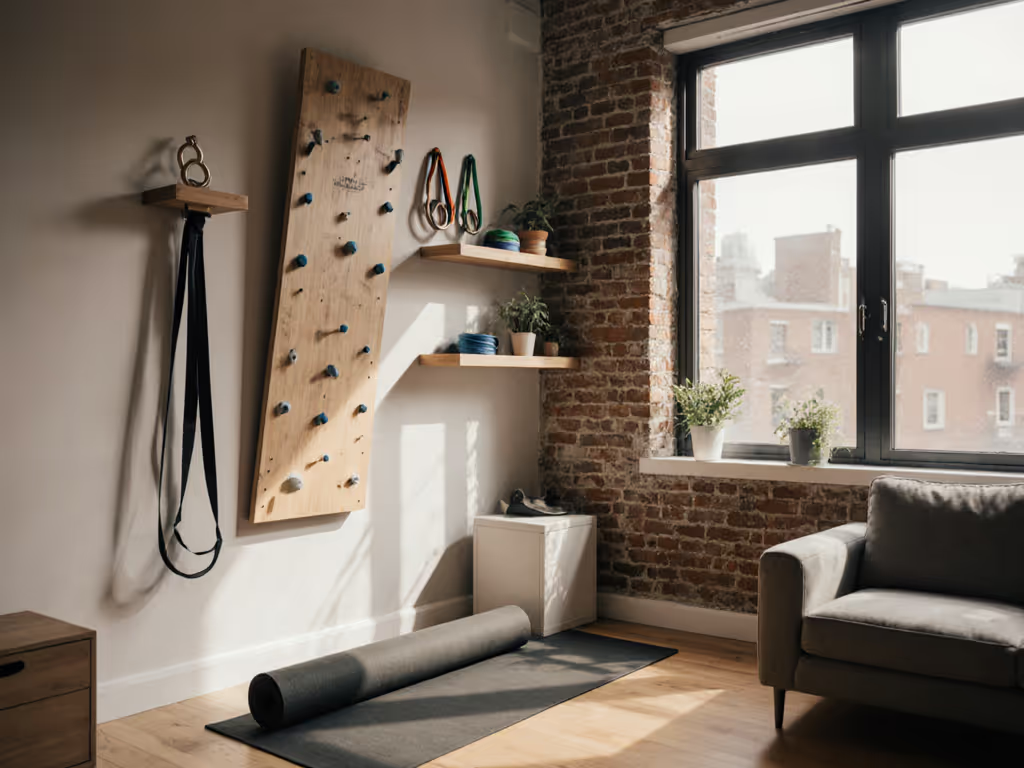
When I helped my parents transition to home training during lockdown (armed only with resistance bands, a mat, and silent tempo timers), the breakthrough wasn't the equipment. It was the reset ritual. After each session, everything vanished into a basket. No guilt, no visual clutter, no neighbor noise complaints. They never missed a session. That's because small wins compound when your space lowers friction daily.
Strength training is injury prevention, not vanity.[1] Running demands power through your hips, glutes, and core; weak stabilizers force compensation patterns that accumulate into tendinitis, knee pain, and stress fractures. A targeted home gym addresses this without the commute, the crowd, or the noise anxiety. For a runner-focused equipment list and layout ideas, see our runner-specific home gym guide.
The research is clear: runners who incorporate regular strength work run faster and reduce injury risk dramatically.[1] But here's the friction point: most runners default to either neglect strength entirely or grab whatever equipment feels impressive, then stop after two weeks because the setup feels chaotic.
Your home gym should do the opposite. It should make the right choice the easy choice.
Dumbbells are non-negotiable. They're space-efficient, versatile across isolation and compound movements, and they scale as your strength grows.[1][2] Unlike a barbell, they don't demand a rack or floor space monopoly. For runners, aim for two pairs: one lighter (8-12 lbs) for mobility and prehab work, one moderate (20-30 lbs) for lunges, step-ups, and single-leg rows.
Hex-shaped dumbbells with soft coating protect floors and won't roll under furniture when you're scrambling to clear the room for a video call. Buy once, use forever.
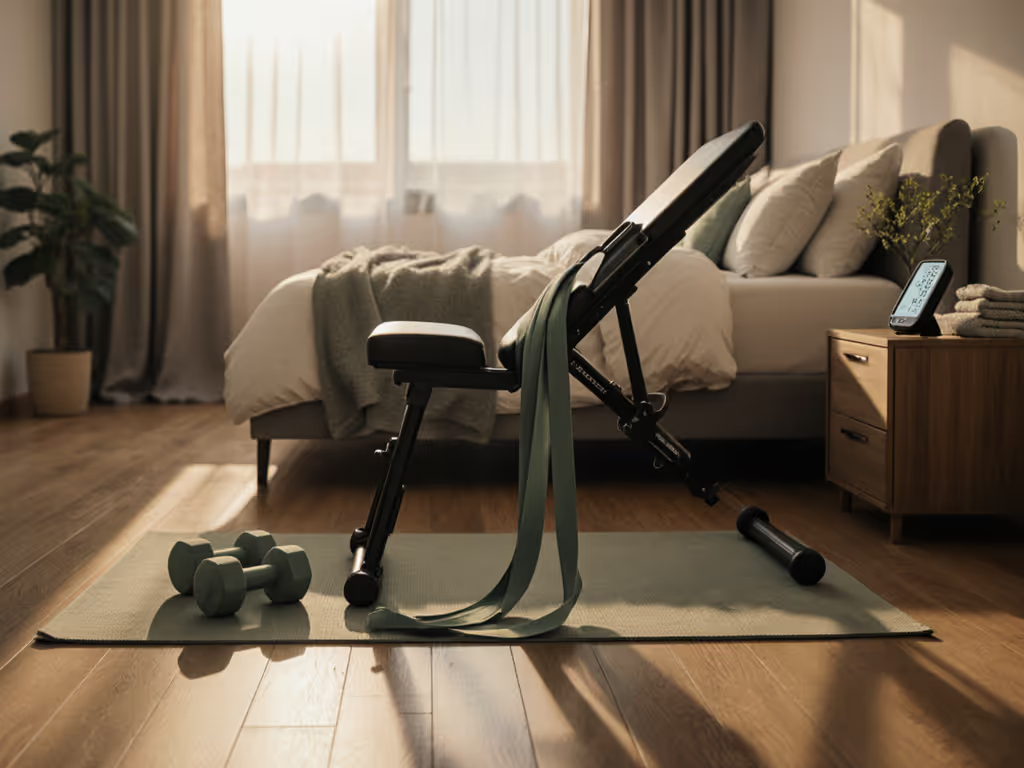
Resistance bands are the weapon of choice for noise-conscious runners.[1][2] A complete set, including loop bands, tubing, handles, and anchors, costs a fraction of a single dumbbell and fits in a drawer. They excel at prehab, core stability, and hip activation, all with zero impact on your floor or your neighbor below.
Use door anchors for rows and chest work; leg straps for glute activation and clamshells. These aren't novelty tools; they're the backbone of consistent, quiet training.
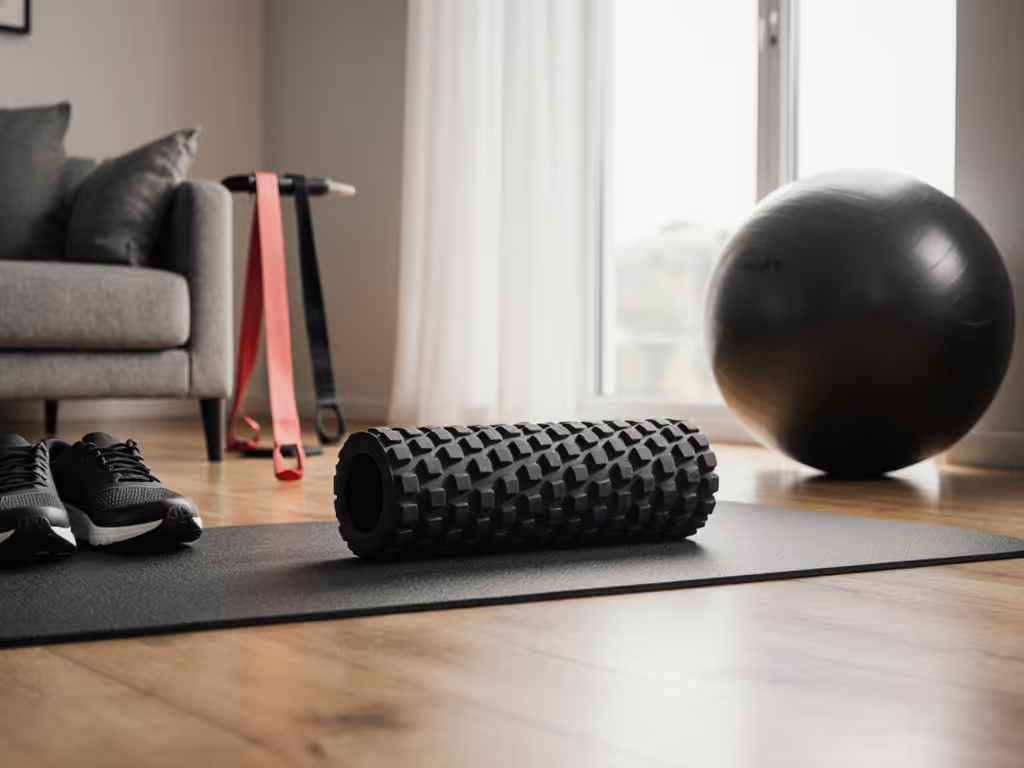
A full-length foam roller and a smaller mobility version round out injury prevention.[2] Runners need improved range of motion; without it, stride restrictions can multiply injury risk.[1] Pair rolling with your strength work for sore-muscle recovery and better performance. For additional tools like massage balls, percussion devices, and compression sleeves, see our home gym recovery equipment guide. No noise, no setup drama.

Sliding discs turn any floor into a training platform.[2] Place them under your hands or feet during planks, mountain climbers, and glute bridges. Your muscles stay under constant tension, which boosts core activation without heavy loading. They're tenant-safe, silent, and portable.
A stability ball strengthens your core and can substitute for a bench in upper-body work, increasing difficulty without heavy iron.[2] It also doubles as a stretching tool. Choose a burst-proof, latex-free option to avoid smell and skin irritation.
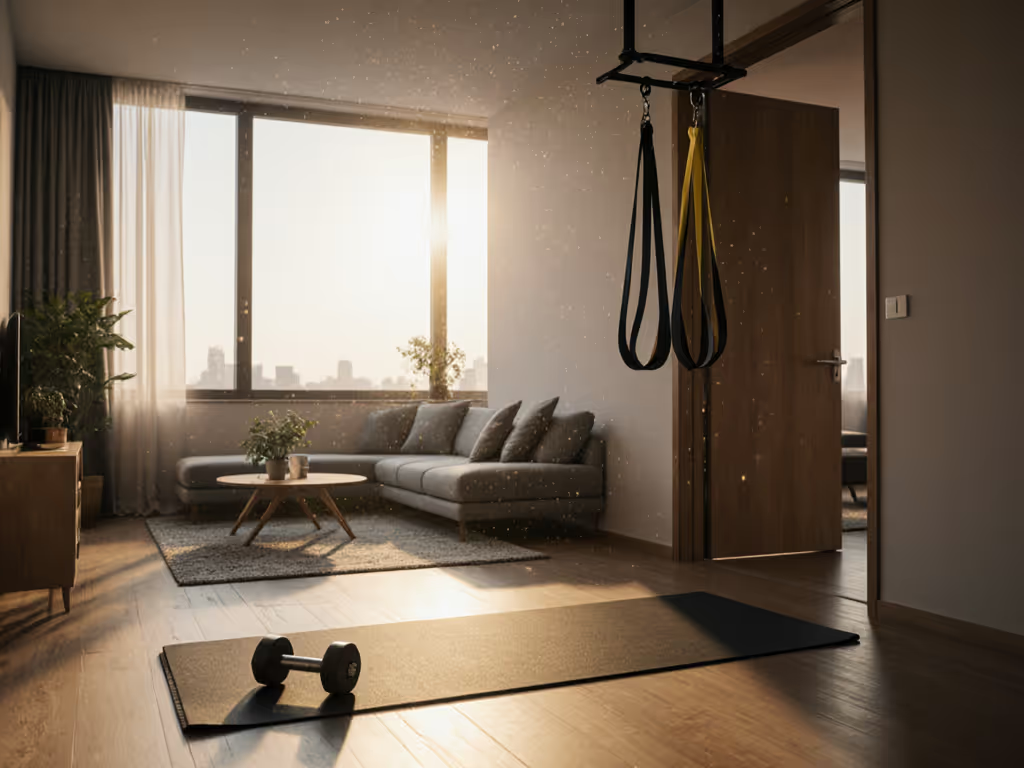
Suspension trainers like TRX offer endless full-body options using your bodyweight and adjustable strap length.[2][3] They anchor over a doorframe or stair banister, require zero floor space, and travel anywhere. For runners, they're gold for scapular stability, unilateral work, and deceleration training, all critical for injury resilience.
Here's the truth: loud equipment kills consistency. If you're waking kids or fielding complaints, you'll find reasons to skip sessions.
Reduce noise at the source:
Equipment sprawl is the #1 killer of home gym consistency. Here's your antidote.
After every session, do this:
Total reset time: 3 minutes. Your space is tidy. Your next session is primed. No guilt, no visual reminder of "I should."
Avoid analysis paralysis by mapping a simple roadmap:
Phase 1 (Weeks 1-4): Foundation
Phase 2 (Month 2-3): Stability & Range
Phase 3 (Month 4+): Load & Leverage
This staged approach prevents overspending and keeps motivation high. Small wins compound.
Don't overthink programming. Runners should focus on moderately heavy weights and moderate rep ranges (three sets of five to seven reps at 60 to 80% of your one-rep max), mixed with mobility and prehab.[8]
Do-this-now weekly template:
No one-rep-max bravado. No ego lifting. Just consistent, safe progression that keeps you running injury-free.
This week:
You don't need a fancy setup. You need a quiet, clutter-free space and equipment that invites you back. Build that, and injury prevention stops being a chore, it becomes a rhythm. Quiet confidence compounds.