Buying Guides by Audience & Goal
Good Home Gym Equipment For Quiet Muay Thai And Thai Boxing
21st May•15 min read
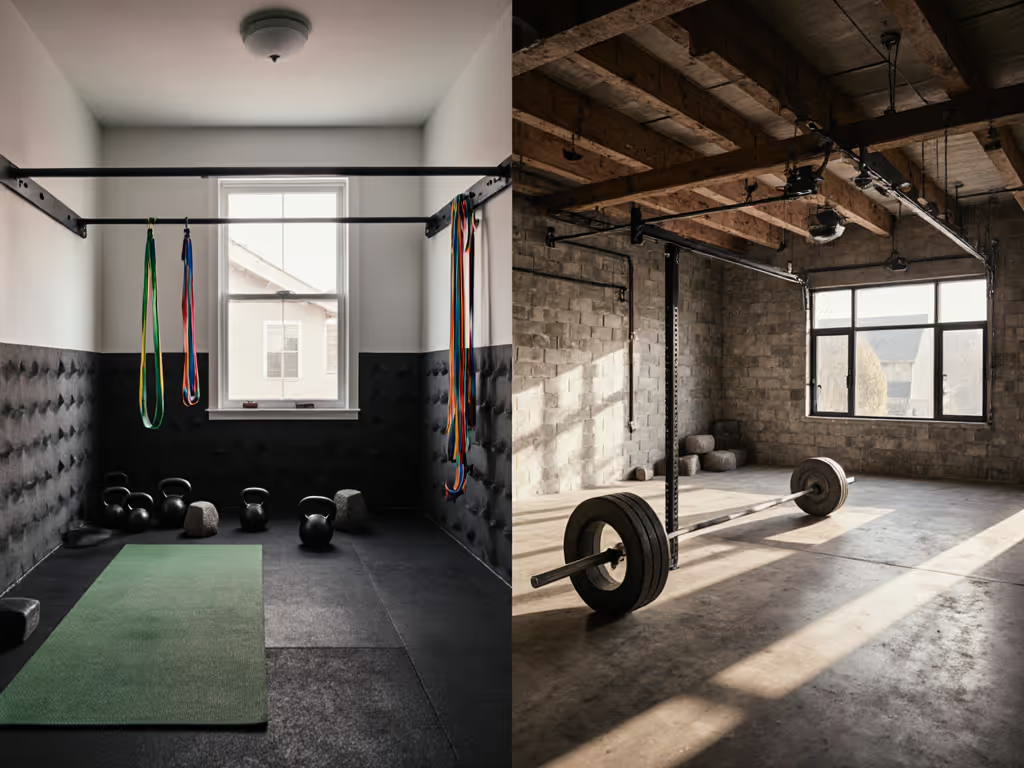
When designing a home gym that supports either CrossFit or strongman training, you're facing radically different spatial and acoustic challenges. The fundamental difference between a CrossFit vs strongman home gym isn't just about the equipment, it's about how these distinct training modalities interact with your physical space. Flow first: the room should invite training, not clutter. Through careful analysis of reach envelopes and clearances, I've found that a well-designed space directly impacts training frequency (messy, constrained environments become avoided rooms, while clean, intentional spaces get used consistently).
A successful CrossFit home setup requires equipment that serves multiple purposes while maintaining clear movement pathways. Unlike commercial boxes with dedicated zones, your home version must function within tighter quarters (typically 150-300 square feet for meaningful functionality).
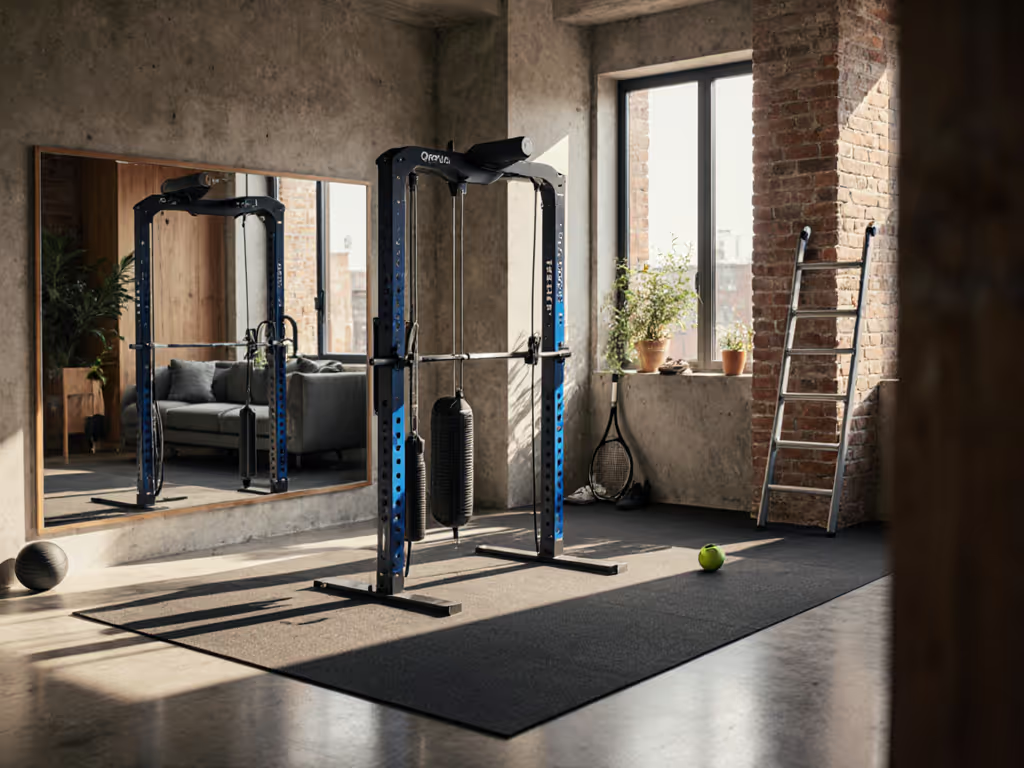
The core of a CrossFit space centers around three key zones:
Unlike traditional strength gyms, CrossFit demands fluid transitions between modalities. This requires careful attention to reach envelopes and clearances (particularly overhead clearance for kipping pull-ups and wall balls). Most residential ceilings (8-9 feet) work if you mount pull-up bars at 7.5 feet, but you'll need to consider light temperature notes (3000-4000K) to maintain visual clarity during high-speed movements. For optimal visibility and reduced eye strain, see our home gym lighting comparison.
Noise considerations for CrossFit home gyms revolve around impact sounds: barbell drops, box jumps, and kettlebell swings. The good news? Most standard CrossFit movements generate noise levels between 65-80 decibels (comparable to a normal conversation at the lower end and approaching vacuum cleaner levels at peak impact). Rubber-coated plates dropped on weightlifting platforms can reduce impact noise by 30-40% compared to concrete floors. To choose materials that actually cut impact noise, compare our soundproof gym tiles vs rolls.
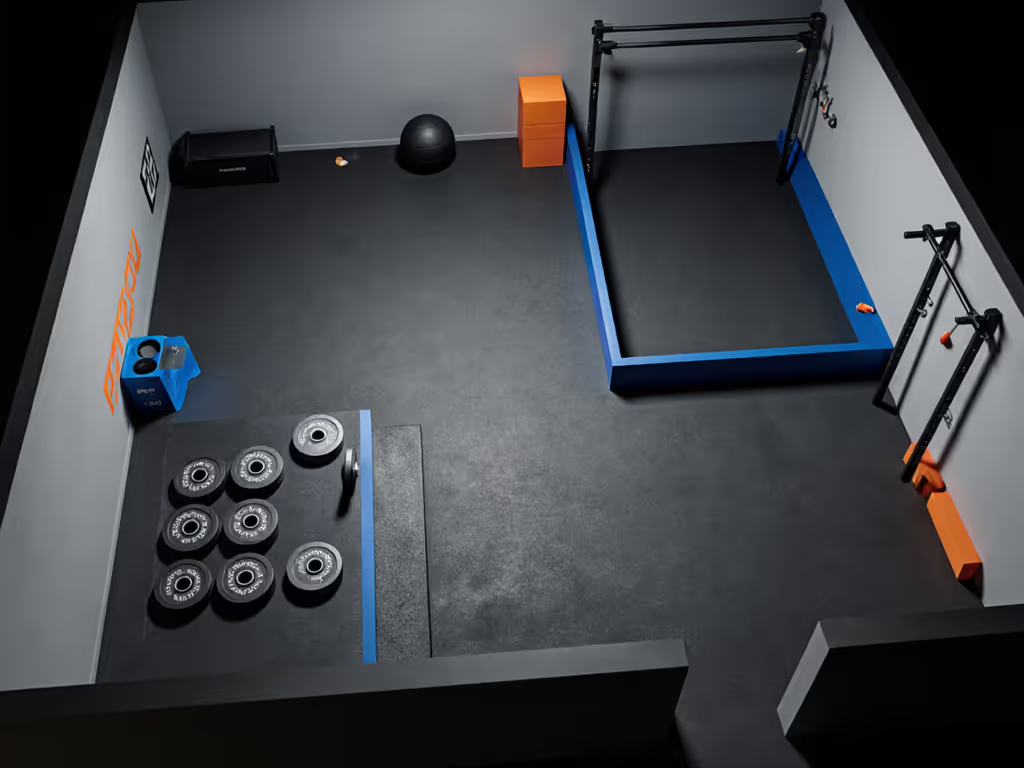
Strongman training at home presents distinctly different spatial challenges. Where CrossFit thrives on versatility, strongman demands specialized equipment that eats square footage. Consider these reality checks:
The most overlooked constraint is ceiling height for overhead movements. While standard Olympic lifting needs 9-10 feet of clearance, overhead stone work or log pressing demands 11-12 feet, which is often unattainable in most residential spaces without structural modification (which falls outside my scope of recommendations).
Noise profiles shift dramatically too. Strongman implements like heavy sleds, farmers' handles, and car deadlifts generate low-frequency vibrations that travel through joists and walls more effectively than higher-pitched CrossFit impacts. These sub-80Hz frequencies are harder to dampen and more likely to disturb neighbors below or adjacent units. If you're in a multi-unit building, follow our apartment gym noise control guide for practical dampening tactics.
| Factor | CrossFit Home Gym | Strongman Home Gym |
|---|---|---|
| Minimum Space | 150 sq ft | 300+ sq ft |
| Ceiling Height | 8-9 ft (sufficient) | 10-12 ft (ideal) |
| Clearance Zones | Multiple small zones | Large single zones |
| Storage Density | High (vertical storage) | Low (large implements) |
| Peak Noise | 75-80 dB (impact) | 85-90 dB (vibration) |
| Vibration Risk | Moderate | Severe |
This table reveals why strongman home gyms struggle in urban environments. The storage density metrics simply don't work in apartments or townhomes. The "weight fitness equipment" for strongman training cannot be efficiently stacked or wall-mounted like kettlebells or dumbbells.
Both modalities require unobstructed movement paths between equipment zones. I've measured that safe transitions between exercises require minimum 36" circulation paths. Any narrower increases collision risk during metabolic work. For strongman training, you'll need even wider paths (48"+) to accommodate awkward carries and loaded walks.
Put everything on rails or walls (this simple principle transforms even the smallest home gym from a storage problem into a training sanctuary).
For noise-sensitive environments, prioritize these solutions in order of effectiveness:
CrossFit practitioners can often work within standard apartment floors with proper matting, but strongman training almost always requires a garage or basement setting with direct concrete access to manage vibration transmission.
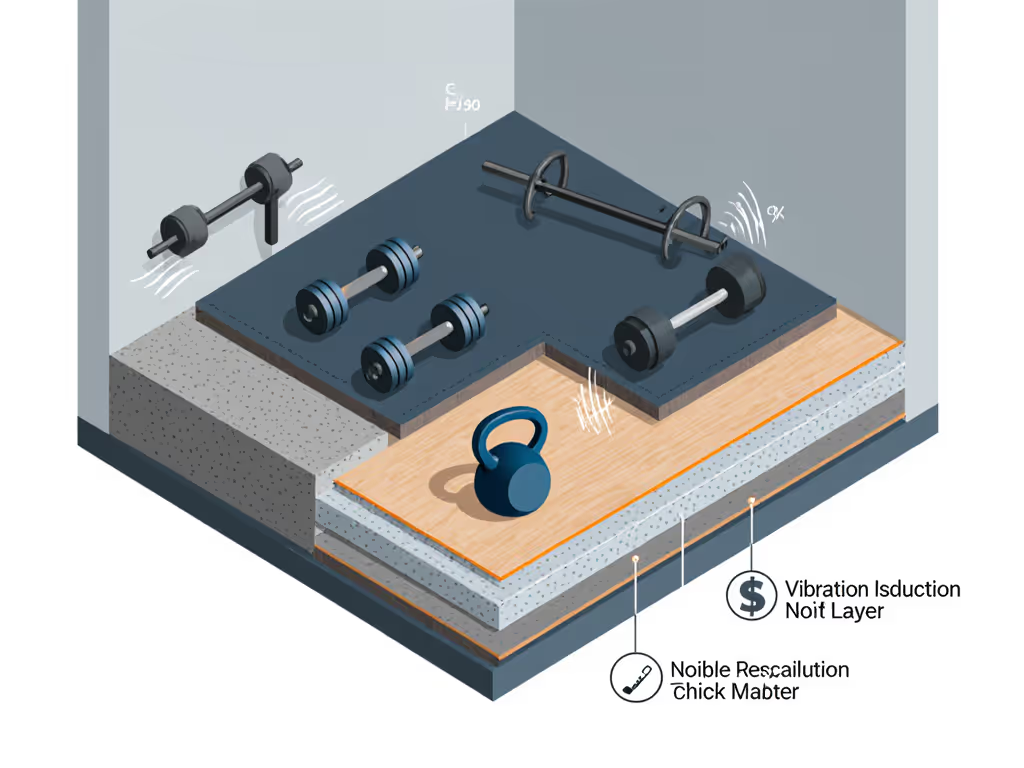
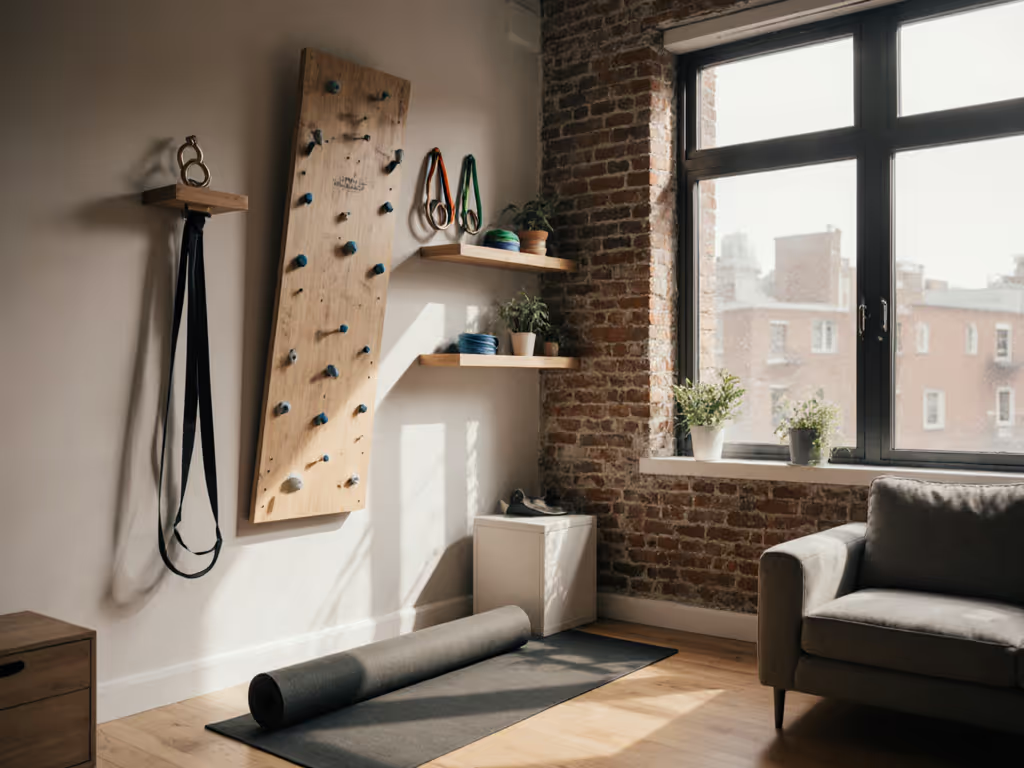
When home gym space requirements feel overwhelming, I recommend the following wall-based solutions that maximize utility while minimizing floor footprint: Before committing to a full rack, review our power rack space & safety guide to decide what attachments you actually need.
These solutions particularly help with posture-friendly cues (properly mounted bars at eye level eliminate the need for awkward neck positioning during overhead work).
Ask yourself these questions before committing to either path:
For most urban dwellers and apartment residents, CrossFit offers a more viable path forward with careful equipment selection. The modularity of kettlebells, resistance bands, and wall-mounted rigs creates a high-training-density environment in surprisingly small footprints.
Strongman enthusiasts in constrained spaces should focus on implements that translate well to small environments: axle work, thick-grip implements, and light-to-medium stone work (using sandbag alternatives that can be stored vertically). Forget the competition-sized tires and sleds, adapt the training to your environment, not vice versa.
Start with this phased approach that respects your spatial reality:
The attic gym anecdote I referenced earlier wasn't just about swapping equipment, it was about recognizing that space constraints derail training adherence when ignored. When that client finally had sightlines to his equipment without visual clutter, his training frequency doubled within a month. Your space isn't just a container for training, it is an active participant in your success.